
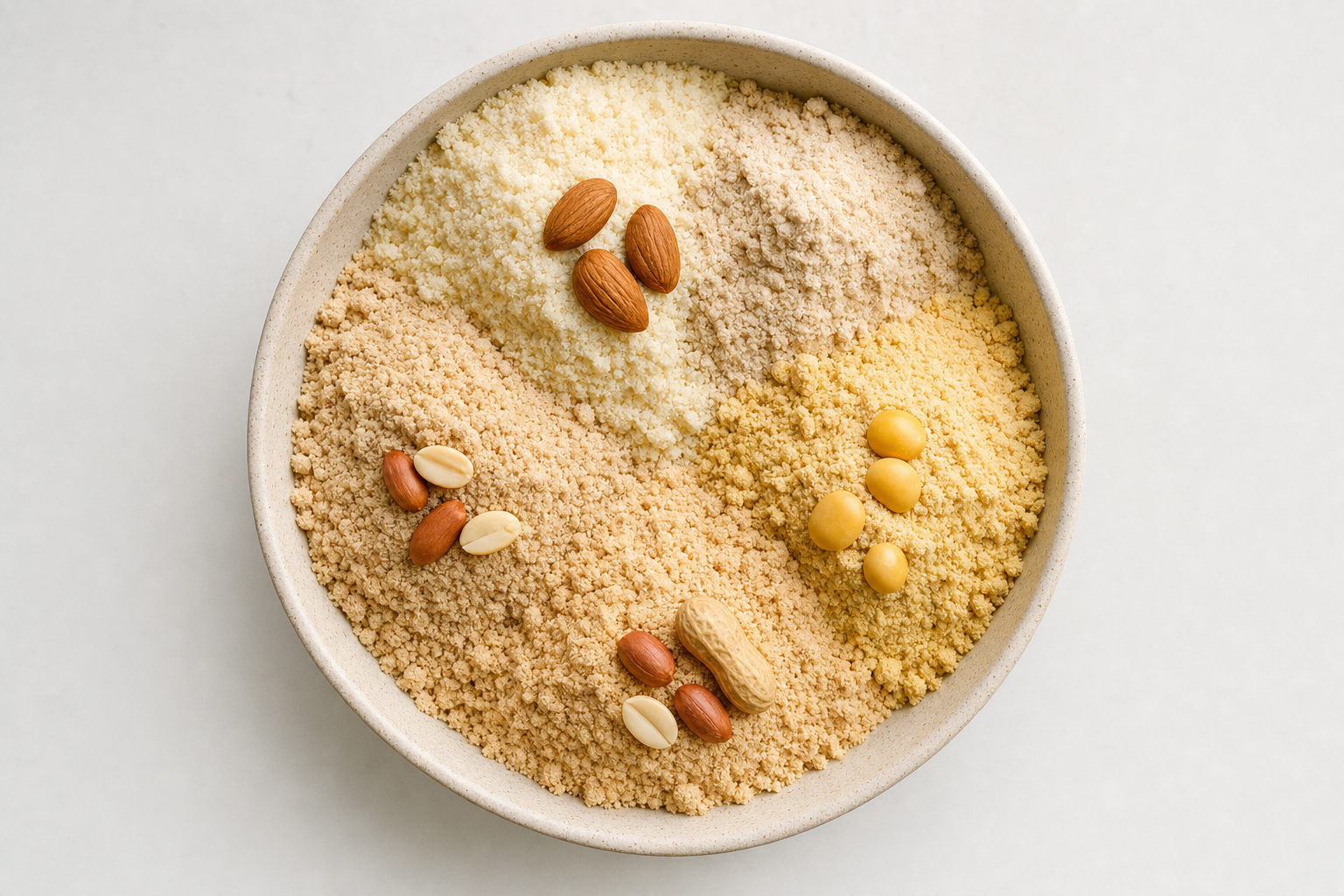
Lupin flour has no gluten, so using too much makes the dough less able to trap steam. Keeping it to a small share of the flour gives a little extra body and flavor without making the pitas overly dense. It brings also a lot of fiber and quite the amount of protein.
 Breads
Whole Spelt and Lupin Pita Bread
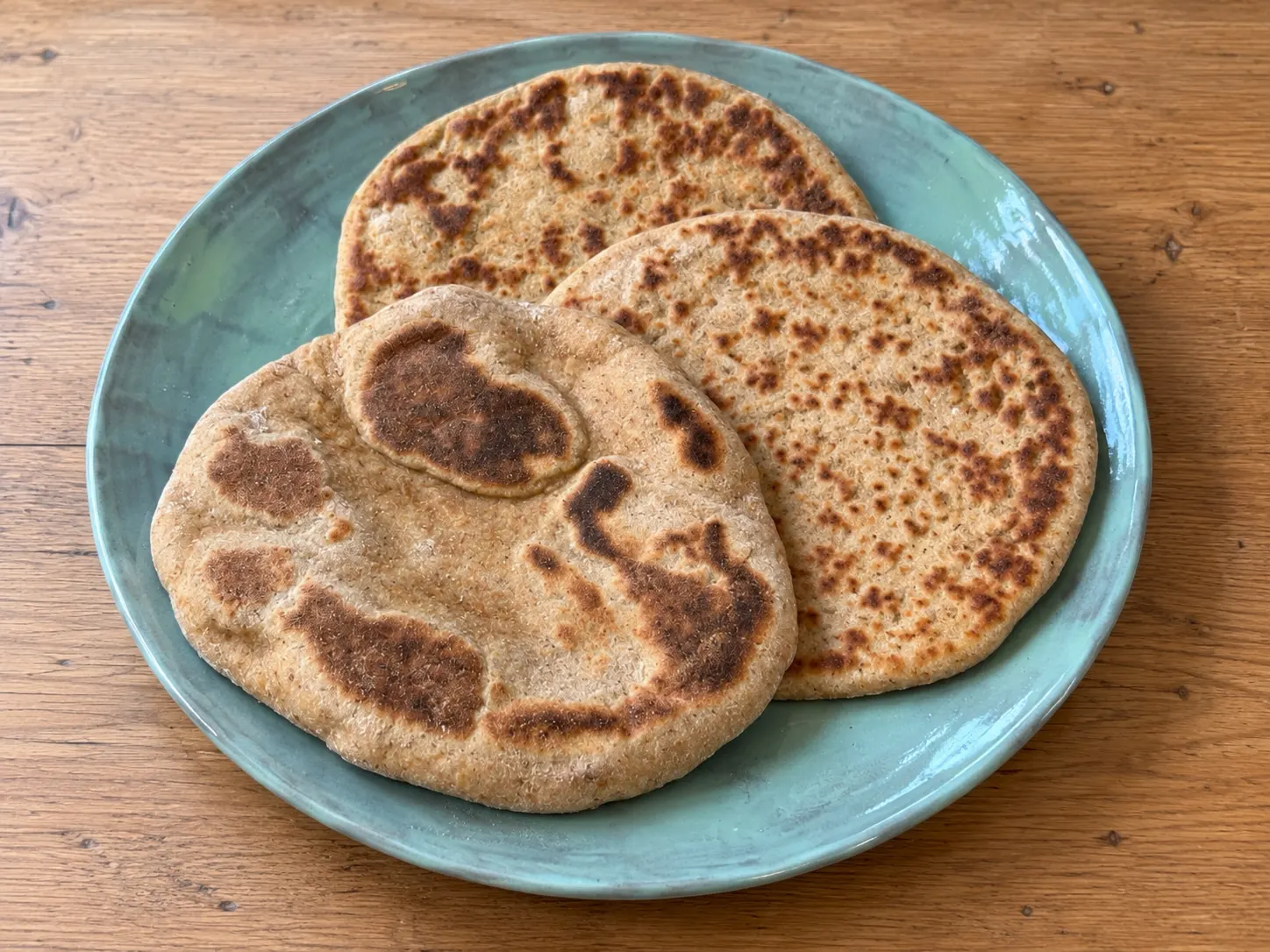
These homemade pitas use whole spelt flour and a small amount of lupin flour for a deeper, slightly nutty flavor and of course the joy of being homemade. The dough is soft and fairly sticky.
Ingredients
Preparation Steps
Mix the dough
Stir the yeast into the lukewarm water. Combine the whole spelt flour, lupin flour, salt and sugar in a bowl, then add the yeast mixture and olive oil. Mix until no dry flour remains.
Knead gently
Knead for 5 to 7 minutes until the dough is cohesive and elastic. It should remain slightly sticky.
Let it rise
Cover the bowl and leave the dough in a warm place for about 75 minutes, until noticeably puffy and close to doubled.
Preheat the oven
Toward the end of the first rise, heat the oven to 250°C with a baking stone, steel or heavy baking tray inside. Allow the surface at least 30 minutes to heat through.
Divide and rest
Turn the dough onto a lightly floured work surface. Divide into 8 equal pieces and gently shape into balls. Cover and let them relax for 15 minutes.
Roll thin rounds
Roll the balls into even rounds about 3 to 4 mm thick. Avoid tears or very thin spots, which can stop the pitas forming a pocket.
Bake and keep soft
Transfer the rounds onto the hot surface and bake in batches for 3 to 5 minutes, until puffed and lightly colored. Move each pita straight into a clean kitchen towel and wrap loosely to keep it flexible.
Recipe insights
What lupin flour changes
Why whole spelt pita sometimes stays flat
Whole spelt dough is less forgiving than strong white bread flour. Uneven rolling, small tears and a baking surface that has not heated through all make pocket formation less reliable. A flat pita can still be perfectly good bread.
Storing and reheating the pitas
Once cool, keep the pitas sealed at room temperature for up to two days, or freeze them with paper between each piece. Rewarm briefly in a hot dry pan or oven, then cover with a towel to soften them.
Cook it in a pan
I gave instructions for cooking it in an oven, but you can also cook it in a pan. It won’t become as puffy, but it can still rise quite well.
Cook it for about 2 minutes on each side in a skillet over medium-high heat.

Make room for your own recipes
A little planning. More good food.
Create recipes with ingredients from our nutrition catalogue and see their nutrition and Feast EAT-Lancet alignment score. Keep your favourites, save your nutrition profile, plan meals by hand and take your shopping list with you.
Free accounts can create up to 10 recipes; a higher limit is coming with a paid plan.
Automatic meal generation and household planning are in beta, with limited access.
Comments
Be the first to comment 👇