Our editorial foundation
The EAT-Lancet diet, made practical.
Food connects our health to the health of the planet. Feast on the Planet turns the EAT-Lancet Planetary Health Diet into recipes and ideas that work at an ordinary family table.
Why food?
A daily choice with collective reach
One dinner is small. Repeated across weeks and households, food choices influence what gets grown, produced and sold. That is why changing the balance of a plate can be a meaningful part of protecting human health, climate, nature and future food security.
Healthy
A varied, plant-rich pattern puts vegetables, fruit, whole grains, legumes, nuts and seeds at the centre.
Sustainable
The framework connects what we eat with the environmental limits within which food must be produced.
Just
A better food system also needs to be accessible, culturally adaptable and fair to the people behind it.
What that means here
Less, not never
We still cook with meat, fish, eggs and dairy. A recipe does not have to be vegan to belong here. We use animal foods more thoughtfully, make room for plants, and look at the pattern across the week instead of judging one meal in isolation.
- Plants get more space on the plate.
- Animal foods can stay, in flexible amounts.
- Family, culture, budget and enjoyment still matter.
- Better habits beat an impossible standard.
On our recipes
A little context, without a lecture
Our editorial recipes include one short note about the “less, not never” approach. It does not calculate or display an EAT-Lancet score, rank the dish or turn animal-sourced food into a warning.
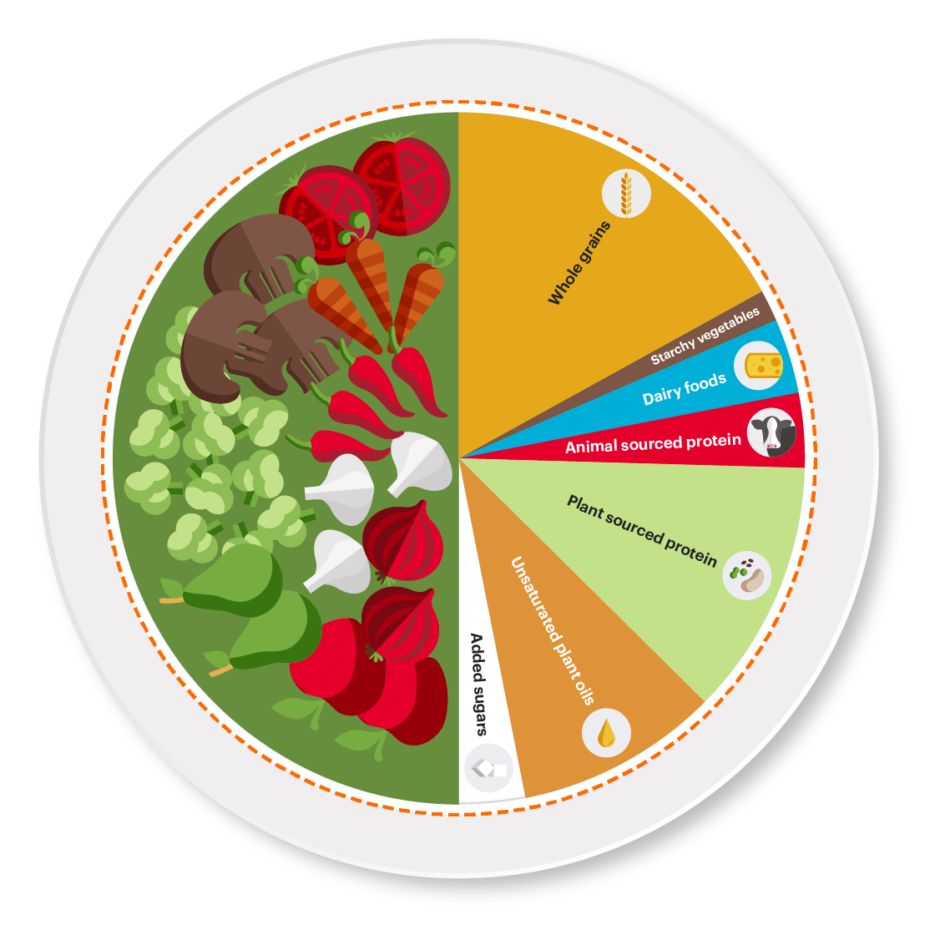
The EAT-Lancet Way
Good for you. Good for the planet.
A simple, science-backed way of eating that puts more plants on your plate and keeps animal foods in balance.
The 2025 EAT-Lancet Commission brings health, environmental sustainability and justice into one food-system framework. Its Planetary Health Diet uses flexible ranges that push plants forward while keeping room for different cultures, needs and animal foods.
Mostly Plants
| Vegetables | 300 g/day (200-600) |
|---|---|
| Fruits | 200 g/day (100-300) |
| Whole grains | 210 g/day |
| Legumes | 75 g/day (0-150) |
| Tree nuts & peanuts | 50 g/day (0-75) |
| Starchy roots & tubers | 50 g/day (0-100) |
Animal-sourced foods
| Dairy products | 250 g/day (0-500) |
|---|---|
| Chicken or other poultry | 30 g/day (0-60) |
| Fish & shellfish | 30 g/day (0-100) |
| Eggs | 15 g/day (0-25) |
| Beef, pork or lamb | 15 g/day (0-30) |
Limit the extras
These are population-average targets from the EAT-Lancet Summary Report, not a strict prescription for every person.