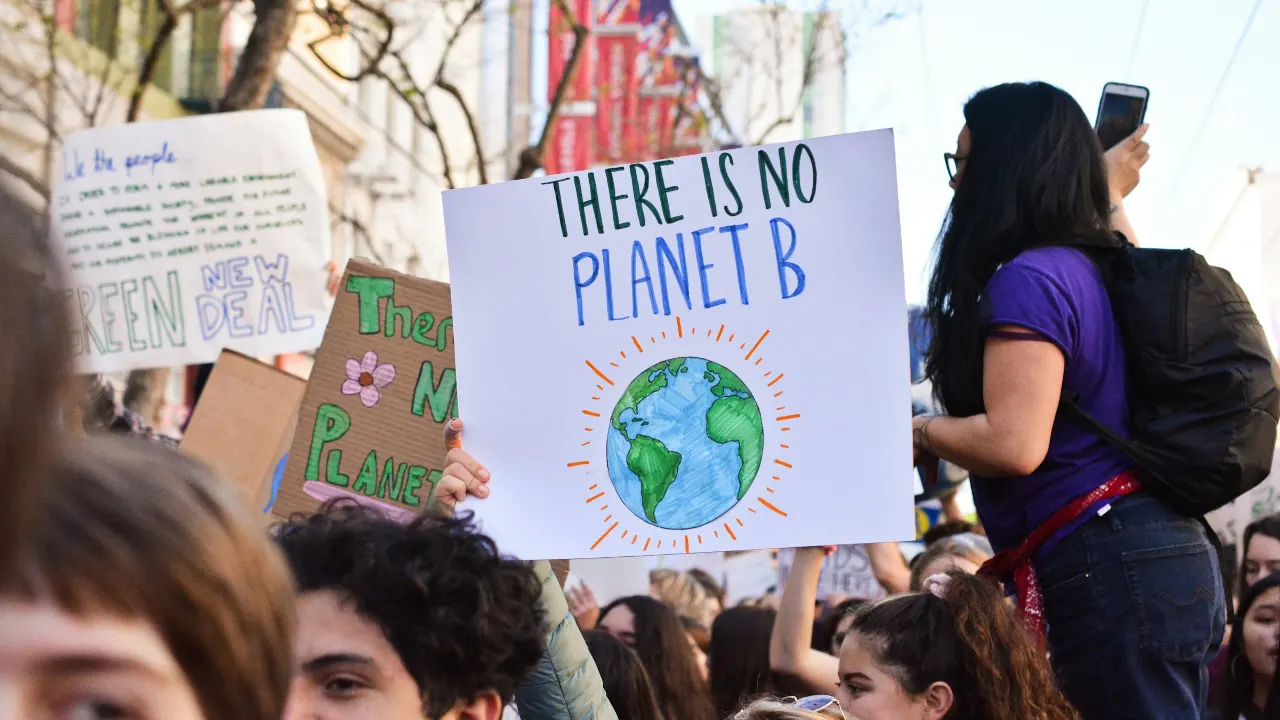
The climate idea is a shift in what we eat most often
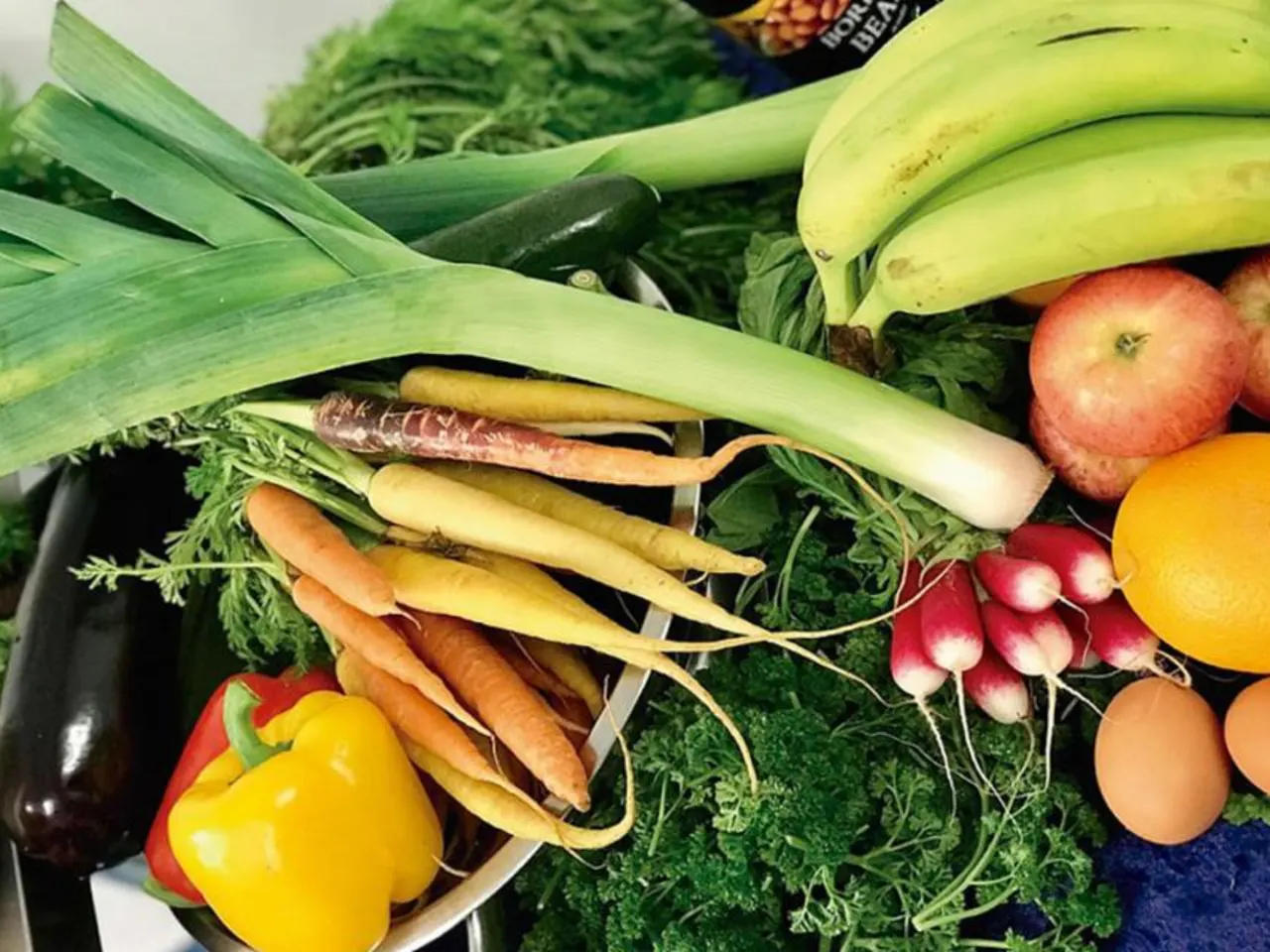
Yes, an EAT-Lancet-style diet can help reduce food-related greenhouse gas emissions. Its central move is to make vegetables, fruit, legumes, whole grains and nuts more prominent, while eating less red meat and other foods with high production impacts. It is a dietary pattern, not a rule that everyone must become vegan. Eggs, dairy, fish and meat can still have a place; their amounts and frequency matter. The Commission presents this plant-rich approach as part of a broader effort to improve health and make food systems more sustainable [EAT-Lancet Commission, 2025].
That distinction matters when the question is climate change. A lower-emissions dinner does not remove greenhouse gases already in the atmosphere. It can, however, reduce emissions associated with producing food. If many diets change, demand for different kinds of food changes too. What farmers can grow, what shops stock and how land is used then determine how much of the potential benefit becomes real.
Nor is there a universal menu that produces the same saving everywhere. Someone who already eats little beef has less to gain from cutting beef than someone who eats it frequently. The useful question is not whether a meal looks sufficiently ‘planetary’. It is which foods it replaces, how often that substitution happens and whether the resulting diet remains nourishing and affordable.
Why replacing beef can matter more than polishing the details
Food emissions come from several stages: land clearing, feed production, fertiliser use, animal digestion, manure, processing and transport. Their importance differs by food. Beef and lamb generally have much higher greenhouse gas footprints than legumes, and impacts can vary substantially between producers of the same food. That variation matters, but it does not erase the broad difference between food categories found in a large analysis of agricultural production [Poore and Nemecek, 2018].
Ruminants such as cattle release methane as microbes ferment feed in their digestive systems. Methane is a potent greenhouse gas, so a change in beef consumption addresses a source that better packaging or a shorter trip home cannot simply cancel. Cattle-production research also examines ways to reduce methane through feeding and management, though these approaches have limits and do not make the amount of beef eaten irrelevant [PMID:42668471].
Carbon footprints are commonly expressed as carbon dioxide equivalents, which put different greenhouse gases on a comparable scale over a specified time horizon. That number is useful, not a complete environmental score. Water demand, habitat, soil condition and the treatment of farm workers do not collapse neatly into it. For a household trying to make a meaningful first change, replacing some beef meals with beans or lentils is usually a more consequential place to start than trying to perfect every minor ingredient choice.
What the research says—and what its numbers cannot promise
A systematic review and meta-analysis reported that greater alignment with the EAT-Lancet diet was associated with greenhouse gas emissions lower by 1.55 kilograms of carbon dioxide equivalents per person per day. Its reported interval was 0.22 to 2.89 kilograms, based on 12 included analyses involving 882,673 participants. The same review found no strong evidence for benefits to water or land use [PMID:42225169]. To put the scale into perspective, the meta-analysis's central estimate corresponds to roughly 566 kg CO₂e per person per year. That should not be interpreted as the saving any particular person or household would achieve, since the result depends heavily on their starting diet but it can give an broad idea.
Greenhouse gas emissions per kilogram of food, from farm to shop shelf:
| Food | EAT-Lancet food group | kg CO₂e per kg |
|---|---|---|
| Beef (beef herd) | Red meat | 99.5 |
| Lamb & mutton | Red meat | 39.7 |
| Prawns (farmed) | Fish & seafood | 26.9 |
| Cheese | Dairy | 23.9 |
| Fish (farmed) | Fish & seafood | 13.6 |
| Pork | Red meat | 12.3 |
| Poultry | Poultry | 9.9 |
| Palm oil | Palm oil | 7.3 |
| Eggs | Eggs | 4.7 |
| Rice | Grains | 4.5 |
| Rapeseed oil | Unsaturated plant oils | 3.8 |
| Milk | Dairy | 3.2 |
| Tofu | Legumes | 3.2 |
| Cane sugar | Added sugars | 3.2 |
| Beans, lentils & other pulses | Legumes | 1.8 |
| Wheat & rye | Grains | 1.6 |
| Peas | Legumes | 1.0 |
| Potatoes | Starchy vegetables | 0.5 |
| Root vegetables | Vegetables | 0.4 |
| Apples | Fruits | 0.4 |
| Nuts | Nuts | 0.4 |
Global averages covering the whole supply chain (land use, farming, animal feed, processing, transport, retail and packaging) [Poore and Nemecek, 2018].
This is an estimate across studied diets and the methods used to assess them, not a meter reading for your kitchen. Dietary studies depend on what people report eating and on production-footprint data that may not describe every farm or supply chain. The wide interval is a reminder that the estimated difference is uncertain. It would be misleading to multiply the central estimate by a population and present the result as guaranteed emissions avoided.
There is also a difference between a diet’s estimated footprint and a fall in emissions measured across a whole food system. If demand for beef declines, production, trade and land use must respond for the full projected saving to materialise. Conversely, improving farming practices need not wait for every consumer to change. The evidence is strongest for the direction of the dietary shift ; particularly away from frequent high-impact ruminant meat consumption, rather than for an exact climate dividend from an individual menu.
Put the lower-emissions choice into an ordinary meal
A useful substitution keeps the job of the original ingredient in mind. Lentils can give a tomato sauce body; beans can make a stew substantial; chopped mushrooms can add a browned, savoury note alongside either. They do not taste exactly like minced beef, and the dish is better when it does not pretend otherwise. Brown onions and mushrooms well, add garlic and spices, then simmer the legumes in the sauce so they absorb its seasoning.
The easiest places to start are meals already built around a sauce, broth or filling:
- Pasta sauce: Replace some or all of the minced beef with cooked lentils and finely chopped mushrooms.
- Chilli: Use beans as the main ingredient, with tomatoes and spices providing the familiar structure.
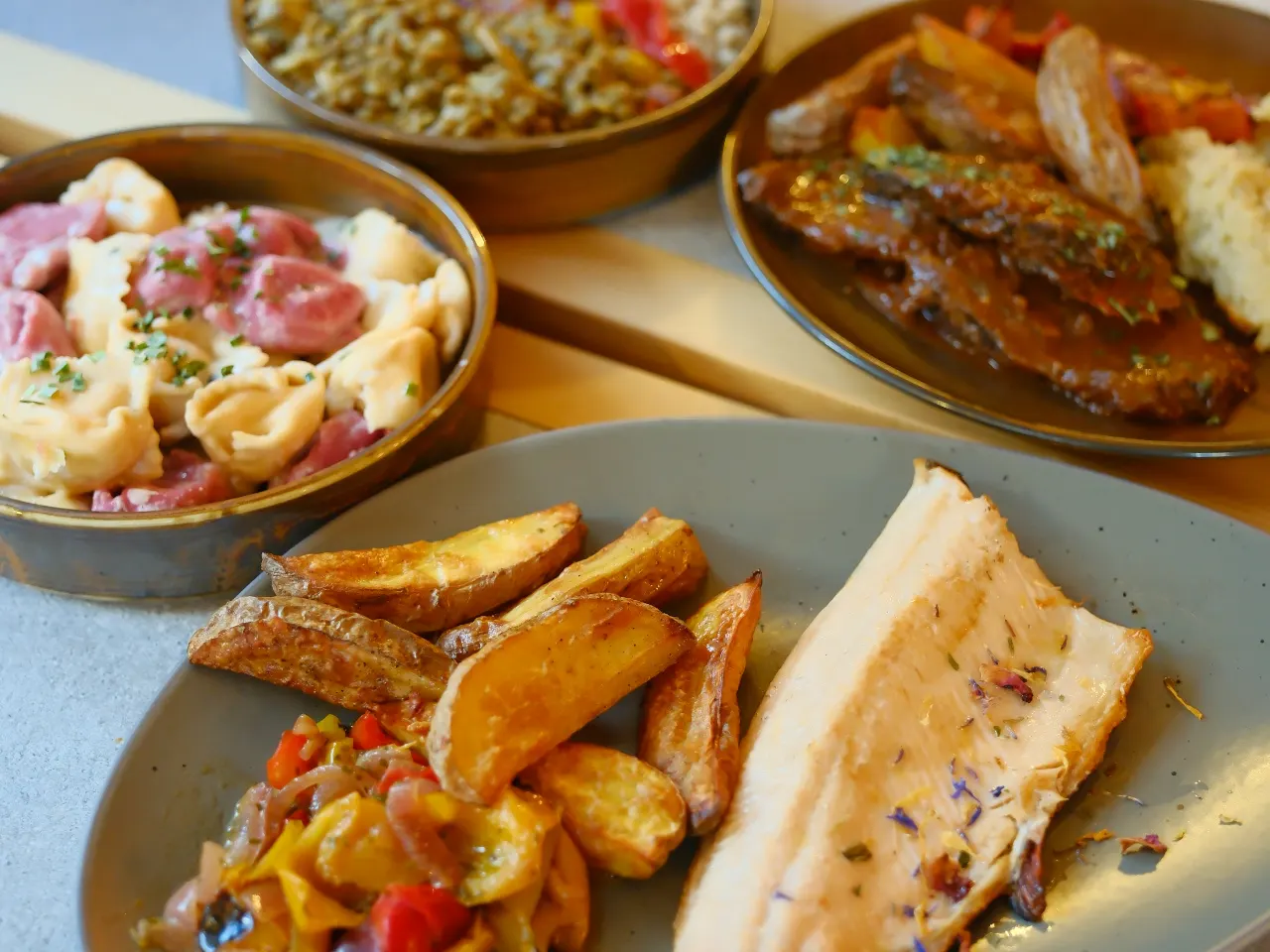
- Grain bowl: Pair cooked grains with chickpeas, roasted vegetables and a sharp dressing; add an egg or a little cheese if that suits the meal.
These are substitutions, not a requirement to buy specialist meat alternatives (which are sometimes ultra-processed food). Dried legumes are useful when there is time to cook a batch; canned ones make the change possible on a weekday. Rinse canned beans if you want to reduce some of the salt in the packing liquid. Buying food you will cook and eat matters more than assembling an impressive collection of perishable vegetables. A lower-footprint ingredient that ends up in the bin has not fulfilled the purpose of buying it.
A climate-friendly pattern still has to meet nutritional needs
Reducing meat without considering what replaces it can leave a diet less satisfying or less nutritionally adequate. Legumes, soy foods, nuts, whole grains and, where included, eggs, dairy or fish can all contribute useful nutrients. Variety matters because these foods do not supply identical amounts of protein, iron, calcium or other nutrients. A plate of vegetables alone is not a substitute for a balanced meal.
The review that found lower estimated greenhouse gas emissions also raised a harder point: its global-average assessment identified risks of inadequate vitamin B12, calcium, iron and zinc, with particular concern for pregnant women. It also estimated that 1.6 to 3.0 billion people could not afford the proposed diet. These are not reasons to dismiss the climate evidence. They are reasons not to prescribe one menu without regard to food access, fortification, life stage or local dietary patterns [PMID:42225169].
In practice, someone who excludes animal foods needs a reliable source of vitamin B12 from fortified foods or a supplement. People who consume little dairy should pay attention to calcium sources, including suitable fortified alternatives. Legumes and whole grains provide iron and zinc, but their availability to the body differs from that in meat; combining iron-containing plant foods with vitamin-C-rich produce is a useful kitchen choice. Pregnancy and other circumstances that change nutrient needs warrant individual advice rather than a generic climate meal plan.
Household choices need support from the food system
A diet cannot be a practical climate option if people cannot buy its ingredients, have nowhere to store them or lack the time and equipment to cook them. Familiar dishes are often a better starting point than a prescribed set of unfamiliar foods. A systematic review of sustainable-diet modelling found that acceptability can change a proposed diet’s composition, nutrient content, price and environmental impact, yet many models have not been tested against how people actually eat. A theoretically optimal diet is not automatically an adoptable one [PMID:42169226].
That is why the climate case for EAT-Lancet is about more than personal discipline. Shops, school meals, workplace canteens and public purchasing can make satisfying plant-rich options ordinary and accessible. Agricultural policy can affect how food is produced, while measures to reduce food waste and improve livestock practices address emissions that menu changes alone do not solve. These approaches work alongside dietary change; they are not competing excuses for inaction.
For readers, the sensible scale is repeatable change. Keep ingredients for a bean-based meal on hand, learn a few preparations that people at your table will eat, and reduce high-impact meat where the substitution works. For institutions, the task is harder: make those choices affordable and available without assuming that every region starts with the same foods, prices or nutritional risks. Climate benefit depends on both sides of that equation.
The useful conclusion is a direction, not a perfect menu
The well-supported case is that shifting diets toward plant foods and away from frequent beef and lamb consumption can lower estimated food-related greenhouse gas emissions. The effect is most relevant where high-impact meat is eaten often. EAT-Lancet offers a framework for that shift while allowing some animal foods, rather than requiring an all-or-nothing diet.
The practical takeaway is to change the centre of meals you already know: use legumes more often, make high-emission meats (especially beef and lamb but other animals products as well)less routine, and keep enough variety to meet your nutritional needs. These changes can meaningfully reduce the greenhouse gas emissions associated with your diet. They are not a substitute for cleaner energy, lower-impact farming, reduced food waste, or policies that make sustainable food more accessible. But following the principles of the EAT-Lancet diet is one practical way individuals can contribute to reducing the environmental impact of the food system.

Comments
Be the first to comment 👇