Whole wheat pizza dough has a reputation for turning dinner into a chewing exercise, but this version avoids that fate nicely. The short rest after mixing lets the flour drink in the water, the olive oil keeps the crumb more flexible, and the final dough smells pleasantly wheaty instead of flat and dusty.
 Breads
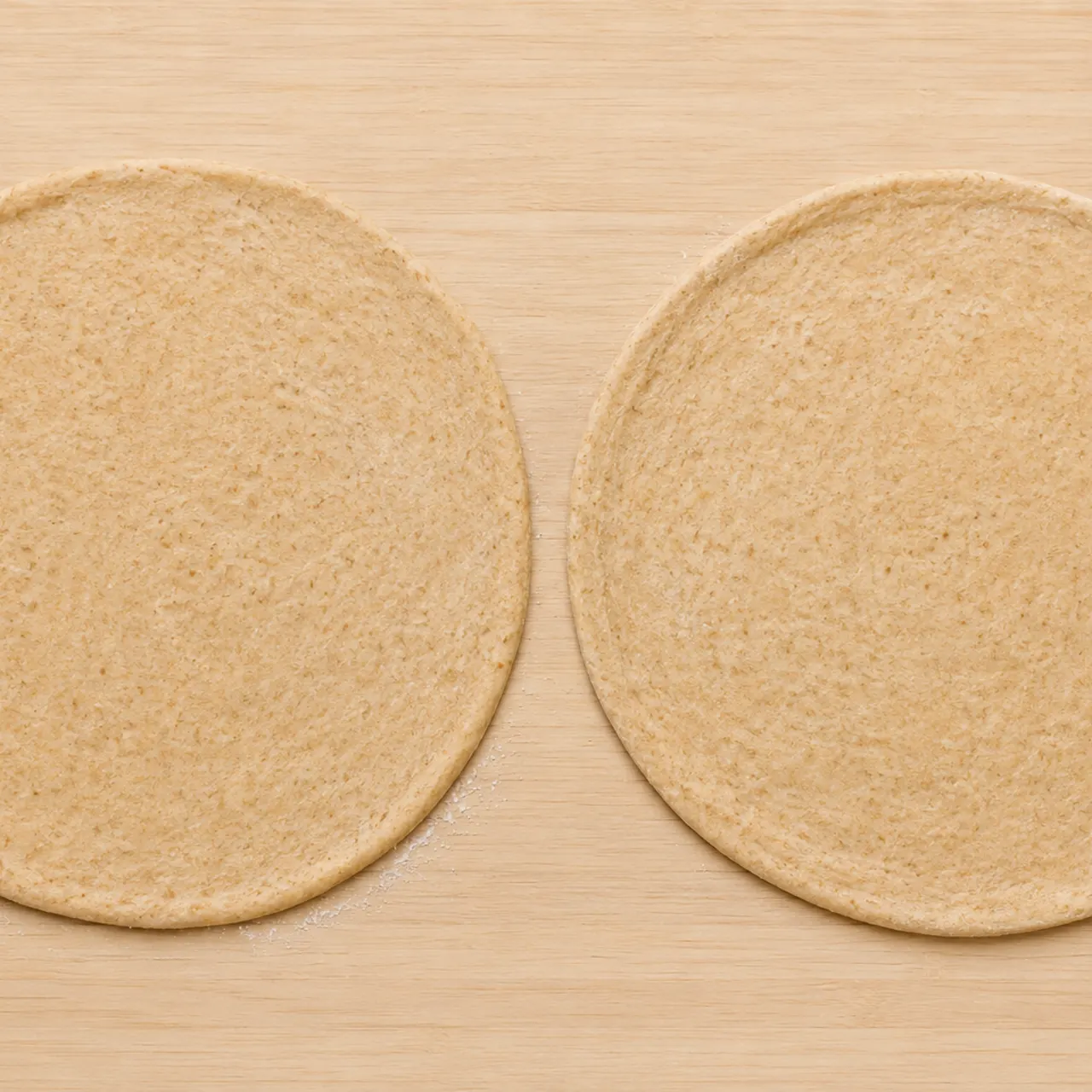
Whole Wheat Pizza Dough
This is a sturdy, fragrant pizza dough with a nutty wheat flavor and enough olive oil to keep it supple. It leans toward the Eat-Lancet idea of using whole grains more often, it'll be less like your typical pizza but way healthier.
Ingredients
Preparation Steps
Mix the dough
Put the whole wheat flour and salt in a large bowl and stir them together. Dissolve the fresh yeast in the water, pour it into the bowl with the olive oil, and mix until a shaggy dough forms with no dry flour left. Cover and let it sit for 15 minutes so the flour can absorb the water properly.
Knead until smooth
Turn the dough onto a work surface and knead for about 8 to 10 minutes until it becomes smoother, more elastic, and only slightly tacky. If it sticks heavily to your hands, keep kneading before deciding it needs any correction.
Let it rise
Place the dough in a lightly oiled bowl, cover it, and leave it at room temperature until it looks puffed and roughly doubled in size. This usually takes about 45 to 60 minutes, depending on how warm your kitchen is.
Shape and rest
Punch the dough down gently, then stretch or roll it into your pizza shape. Let it rest for about 15 minutes so the gluten relaxes and the dough is easier to top and bake.
Recipe insights
A pizza base with a bit more self-respect
Why the timing matters more than people want to admit
There is no baking time here because this is the dough stage only, but the resting time does real work. Fifteen minutes before kneading makes the dough easier to handle, then 45 to 60 minutes of rising builds lightness, and the last 15-minute rest helps it relax so it stretches without fighting back like a tiny gluten grudge. Convenient? Reasonably. Instant? Of course not. Yeast was never designed for people who want dinner in six minutes.
More whole grain, more fiber, still very usable
Nutritionally, this dough brings far more substance than a standard white base. The full batch provides about 65 grams of fiber and 65 grams of protein, thanks mostly to the whole wheat flour. That means the crust contributes something beyond starch and nostalgia. Whole grains are a practical fit with Eat-Lancet principles too: more minimally refined plant foods, fewer ultra-processed shortcuts, and a meal structure that can support vegetables, beans, and smaller amounts of cheese if that is how your family eats.
A sensible planet-friendly swap for pizza night
From a sustainability angle, this dough is refreshingly low on complication: flour, water, yeast, salt, olive oil. No animal products, no industrial extras, no mysterious tube of beige chemistry from the chilled aisle. Making the base at home also gives you control over what lands on top, which is where pizza can either become a balanced family meal or a dairy avalanche with a tomato alibi. If you are new to whole grain dough, using part bread flour is a fair compromise for a softer, easier stretch. Progress does not need to arrive wearing a hair shirt.
Make room for your own recipes
A little planning. More good food.
Create recipes with ingredients from our nutrition catalogue and see their nutrition and Feast EAT-Lancet alignment score. Keep your favourites, save your nutrition profile, plan meals by hand and take your shopping list with you.
Free accounts can create up to 10 recipes; a higher limit is coming with a paid plan.
Automatic meal generation and household planning are in beta, with limited access.
Comments
Be the first to comment 👇