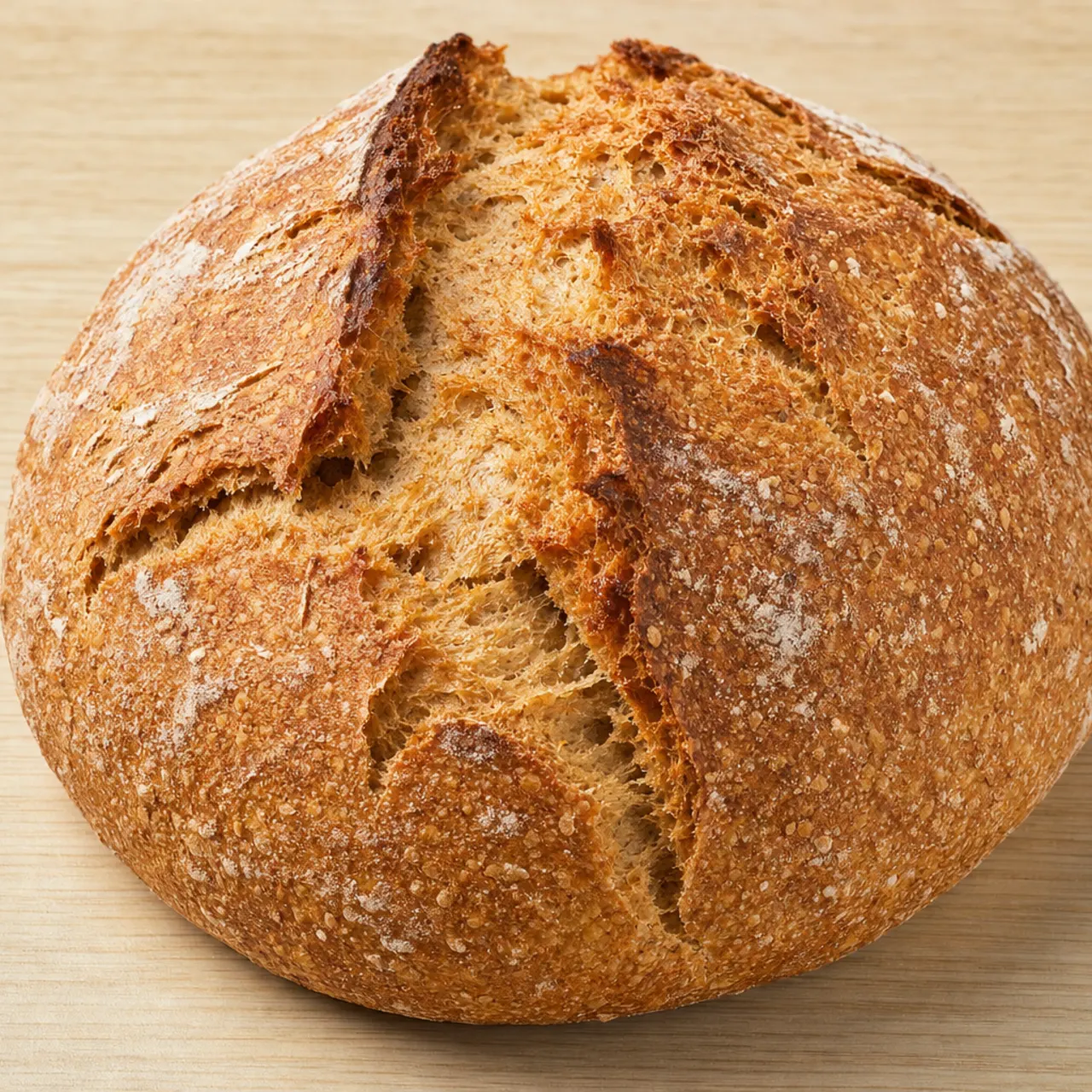
This is the kind of bread that reminds you flour, water, salt, and patience can still outperform a plastic-bag loaf engineered to survive minor collapse. Whole wheat brings nuttiness and fiber, whole spelt softens the texture just enough, and sourdough fermentation adds that gentle tang and deeper flavor that makes toast feel suspiciously luxurious.
It's a pitty because currently there are so many food influencers making sourdough bread but none of them use whole wheat flour, but they should know that the darker the bread gets, the better it is, like all of my friends.
 Breads
Whole Wheat & Whole Spelt Sourdough Bread
A hearty sourdough loaf made with whole wheat flour and whole spelt flour, with a crackly crust, a mildly tangy crumb, and enough character to make supermarket bread seem like a bureaucratic error. It leans into whole grains for fiber and steadier energy, while sourdough fermentation helps with flavor and digestibility. Very Eat-Lancet, very practical, and deeply satisfying if you enjoy your kitchen smelling like competence.
Ingredients
Preparation Steps
Mix the dough
In a large bowl, stir together Whole Wheat Flour, Whole Spelt Flour,salt, most of the Water, and sourdough starter until no dry patches remain, holding back a small splash of Water for later if the dough already feels quite soft. Cover and let the shaggy dough sit for 30 minutes at room temperature .
Bulk ferment
Leave the dough covered at room temperature for about 3 to 4 more hours, until it looks puffier, feels airy under the surface, and has expanded noticeably without collapsing. If your kitchen is cool, it may take longer; the dough should show bubbles along the sides and jiggle slightly when the bowl is nudged.
Strech & foooooooooold
Stretch and fold the dough. With slightly wet hands, gently grab one side of the dough, stretch it upward without tearing it, then fold it back over the center. Rotate the bowl a quarter turn and repeat this process on all four sides. Cover the dough and let it rest for 30 minutes, then repeat the stretch and fold 2 to 3 more times at 30-minute intervals. Each time, the dough should feel smoother, stronger, and more elastic.
Shape and proof
Turn the dough onto a lightly damp surface, shape it into a tight round or oval, and place it seam-side up in a lined bowl or proofing basket. Cover and let the dough proof for 1 to 2 hours at room temperature, or chill it for 8 to 12 hours in the fridge for slower fermentation and deeper flavor.
Bake the loaf
Heat the oven to 240°C with a covered Dutch oven inside for at least 30 minutes so the pot is fiercely hot. Turn the dough onto baking paper, score the top, transfer it into the hot Dutch oven, cover, and bake for 20 minutes; then uncover, lower the oven to 220°C, and bake for 20 to 25 minutes more until the crust is deeply browned and the loaf sounds hollow when tapped. If you want a more reliable cue, the center should register about 96°C when done.
Cool before slicing
Transfer the bread to a rack and let it cool completely for at least 1 hour before slicing. This resting time lets the crumb set and finish releasing steam, which is the difference between proper bread and a gummy tragedy with a nice crust.
Recipe insights
A loaf with actual substance
Why it works for health
Nutritionally, this loaf leans in the right direction without turning breakfast into a sermon. The whole-grain flours help deliver fiber, steady-release carbohydrates, and more satiety than standard white bread. That means a slice with soup, eggs, beans, or nut butter can keep you going longer, instead of sending you back to the kitchen 90 minutes later looking for emotional support snacks.
Why it fits the Eat-Lancet mindset
From an Eat-Lancet perspective, this bread makes a lot of sense: more whole grains, minimal processing, and a low-impact ingredient list built mostly from plants and time. No exotic wellness dust, no industrial choir of additives, just a practical staple that helps shift meals toward something healthier and more planet-friendly without asking your family to join a lentil monastery.
The long rest is not the enemy
Yes, the resting and proofing time is long. That is the deal with good sourdough: you do a bit of work, then the dough handles its quiet existential transformation while you live your life. An overnight cold proof is especially useful here, because it deepens flavor, improves scheduling, and lets you bake on your own terms instead of entering into a flour-based hostage situation at 4 p.m.
How to serve it without overthinking it
Use this loaf for toast, sandwiches, soup nights, or thick slices with hummus, mashed beans, soft cheese, or eggs. It is hearty enough to anchor a simple meal and flavorful enough that you do not need to bury it under half the fridge. Which is nice, because sustainable eating gets much easier when the food already tastes like it has a point.






Make room for your own recipes
A little planning. More good food.
Create recipes with ingredients from our nutrition catalogue and see their nutrition and Feast EAT-Lancet alignment score. Keep your favourites, save your nutrition profile, plan meals by hand and take your shopping list with you.
Free accounts can create up to 10 recipes; a higher limit is coming with a paid plan.
Automatic meal generation and household planning are in beta, with limited access.
Comments
Be the first to comment 👇