Because yes, sweetness is complicated
If you’ve ever tried to "just cut sugar" and then found yourself eating spoonfuls of jam over the sink like a Victorian orphan with access to Wi-Fi, welcome. Most of us like sweet things because the human brain is wonderfully sophisticated and also, apparently, very easy to bribe. The good news is that there are alternatives that fit an EAT-Lancet-style kitchen better than plain refined sugar: ingredients that can bring sweetness along with fiber, minerals, lower overall use, or a smaller processing footprint. The less fun news is that no magic syrup has been sent from the heavens to make dessert a health food. Some options are clearly better than table sugar in certain contexts, but they still work best as tools for using less sweetness overall, not as halo-wearing loopholes.
Yacon syrup: the hipster root syrup with actual perks
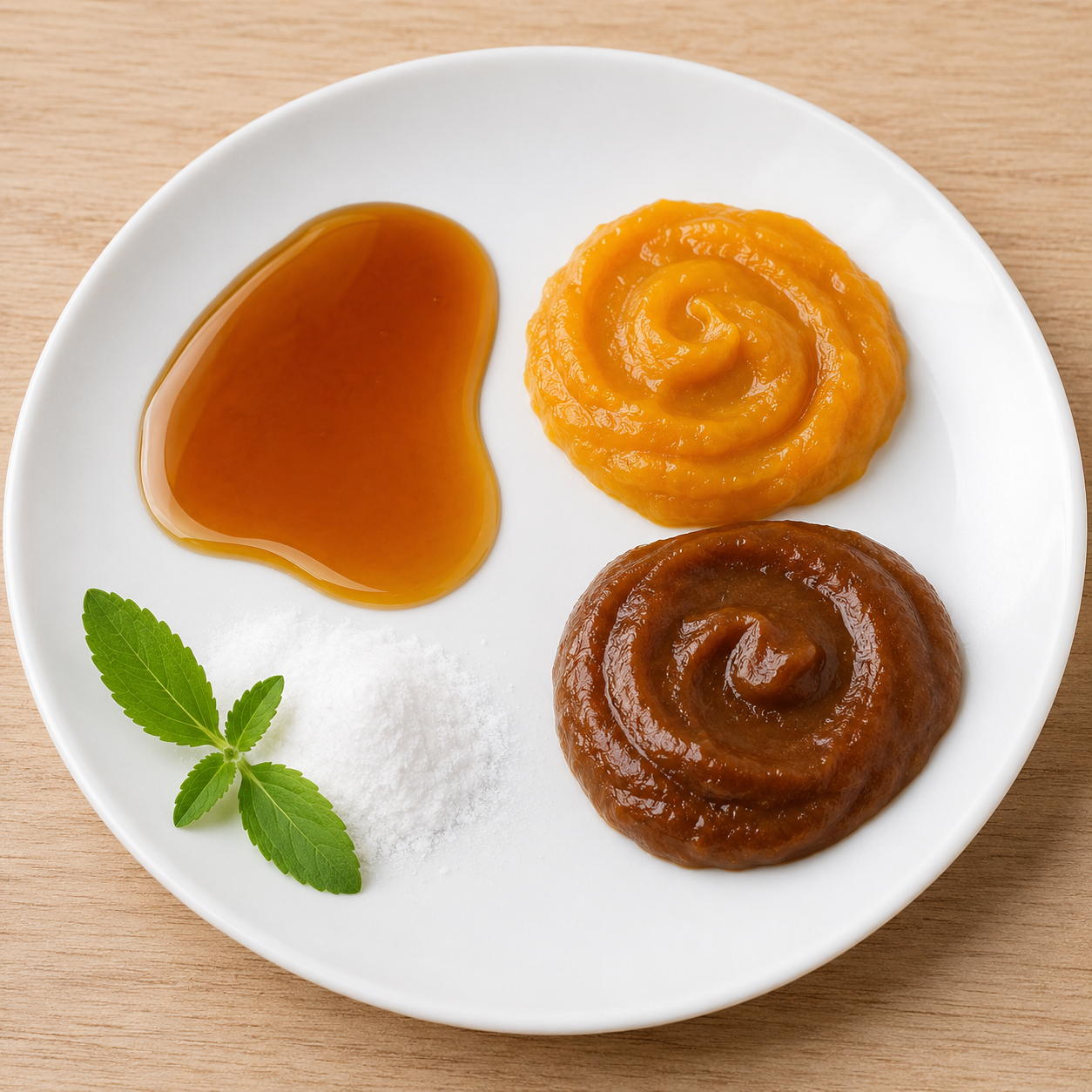
Yacon syrup comes from a South American root and has a dark, molasses-like flavor with caramel notes. Nutritionally, its main selling point is that it contains fructooligosaccharides, a type of prebiotic fiber that may support gut health and generally causes less of a blood sugar spike than regular sugar. In practice, that makes it interesting for drizzling into porridge, yogurt, pancakes, or whisking into dressings where a deep sweetness is welcome. From an EAT-Lancet perspective, it is plant-based and can help reduce reliance on highly refined sweeteners. The drawbacks? It is expensive, not available everywhere, and too much can cause bloating or digestive drama of the "I have made a mistake" variety. It is also still sweetener, not fairy dust. Use it because you like the flavor and can use a smaller amount, not because you think your cookies have become a medical intervention.
Date cream: the family-friendly workhorse
Date cream, made by blending soaked dates with a little water, is one of the most useful sweeteners in a whole-food kitchen. It brings sweetness, fiber, potassium, and a lovely rounded caramel taste. It works beautifully in baking, smoothies, overnight oats, energy bites, and even some savory sauces. Compared with white sugar, it is less refined and more satiating, which can help rein in the endless cycle of sugar highs, crashes, and staring blankly into the fridge five minutes later. Environmentally, dates are still a crop that must be grown, transported, and processed, but as a minimally transformed plant food they fit the spirit of a more whole-food, plant-forward diet quite well. The catch is texture and flavor: date cream is brown, fruity, and bold, so it will absolutely announce itself in pale cakes or delicate custards. It is also still concentrated sugar from fruit, even if it arrives dressed as something wholesome and dependable.
Dried apricot cream: bright, tangy, and oddly underrated
Dried apricot cream deserves more love. Blend unsulfured dried apricots with hot water and you get a thick, golden paste that adds sweetness with a pleasant tart edge. It is especially good in breakfast bowls, thumbprint cookies, compotes, fruit desserts, or glazes where you want sweetness without the heavier, toffee-like profile of dates. Apricots also contribute some fiber and carotenoids, so nutritionally they bring more to the table than empty sugar crystals that have the emotional range of your father. On the downside, dried apricot cream is less neutral than sugar and can be tangy enough to change a recipe’s balance. It also tends to be pricier than common sweeteners, depending on where you shop. Still, for people trying to cut back while keeping flavor interesting, it is a clever option.
Stevia: useful, divisive, and not invited to every party
Stevia is a high-intensity sweetener extracted from a plant, and because it adds sweetness with little to no calories or impact on blood glucose, it can be genuinely helpful for people who need to manage sugar intake carefully, including some people with diabetes. A tiny amount goes a very long way, which means less agricultural input per unit of sweetness than bulk sweeteners. That said, stevia has a famously divisive aftertaste: some people barely notice it, while others taste bitterness and regret. It also does not provide the bulk, browning, or texture of sugar in baking, so you often cannot swap it in directly without changing the recipe. In short, stevia is practical, but not romantic. It is the accountant of sweeteners: efficient, sensible, and not the reason anyone writes poetry.
Other EAT-Lancet-friendly options worth knowing
A few other alternatives can make sense depending on the recipe. Fruit purées, especially apple or pear purée, are excellent for cakes, muffins, pancakes, and porridges: they add sweetness, moisture, and some fiber, while helping reduce total sugar and fat. Mashed banana works similarly, though with a stronger flavor that says "banana" with all the subtlety of a marching band or a drunk neighbour at 3 am. Raisin paste can replace part of the sugar in baked goods and sauces, with the same whole-fruit advantages and the same color-related side effects. Small amounts of maple syrup or honey can also have a place, especially when a recipe really needs a liquid sweetener and you want strong flavor so you can use less. Between the two, maple syrup usually aligns better with a plant-forward pattern, while honey remains an occasional option rather than a default. The disadvantage of all syrups, of course, is that they are still concentrated sugars, why all the things in life I love the most are also unhealthy you may ask, I'll answer saying : because if it doesn’t shorten my lifespan, somehow it also doesn’t hit the same.
So what is actually the best option?
The boring, correct, fuxxing irritating answer is this: the best option is still to gradually reduce your overall taste for sweetness. That is the direction supported by public health guidance, including WHO recommendations to keep free sugars low, and it also fits the EAT-Lancet philosophy of building diets around minimally processed plant foods rather than chasing ever more creative ways to sweeten everything from coffee to tomato sauce. Too much sugar is linked to poorer metabolic health, dental problems, and a diet that crowds out more nourishing foods. So yes, use date cream, yacon syrup, stevia, fruit purée, or apricot cream when they genuinely improve a recipe and help you rely less on refined sugar. But let’s not pretend the final boss has been defeated because we bought a very expensive bottle of brown syrup from a health shop. Sweet things are wonderful. They are also best treated as occasional pleasures rather than a basic food group, no matter how persuasive the muffin looks.
Comments
Be the first to comment 👇