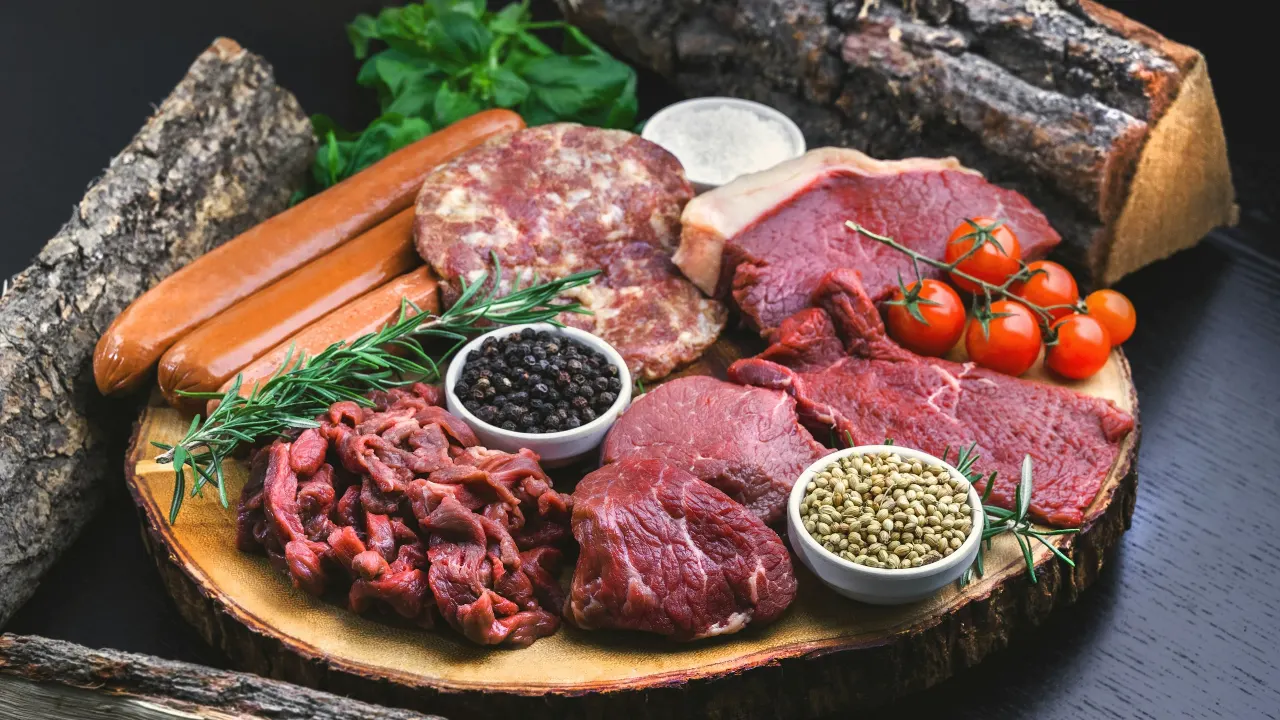
A Practical Weekly Meat Budget
How Much Meat Can You Eat on the Planetary Health Diet?
The short answer: less than most meat-heavy Western diets, but definitely not zero.
The 2025 EAT-Lancet Planetary Health Diet uses a reference intake of around 15 g of red meat and 30 g of poultry per person per day. Those numbers make more sense when you zoom out to a week: roughly 100 g of red meat and 200 g of poultry per person per week.
That could mean one small serving of beef, pork or lamb and two servings of chicken during the week , not 15 grams of steak sitting sadly in the corner of your plate every evening.
And importantly, these are population-level reference amounts, not rigid daily prescriptions. The Planetary Health Diet is designed to be flexible across cultures, preferences and individual diets. [EAT-Lancet Commission, 2025]
Think in weeks, not days
Think in Weeks, Not Days
The daily numbers are useful for researchers. For dinner, a weekly budget is much easier.
The 2025 reference values are approximately:
Red meat : beef, pork or lamb: 15 g/day → about 105 g/week
Chicken and other poultry: 30 g/day → about 210 g/week
The suggested ranges also extend down to zero: 0–30 g/day for red meat and 0–60 g/day for poultry. In other words, you do not need to eat either one to follow the pattern.
Nor do you need to divide them equally between seven days.
A week might look like this:
Monday: lentil curry
Tuesday: chicken and vegetable stir-fry, around 100 g chicken per person
Wednesday: bean chilli
Thursday: pasta with tomato sauce, vegetables and cheese
Friday: fish
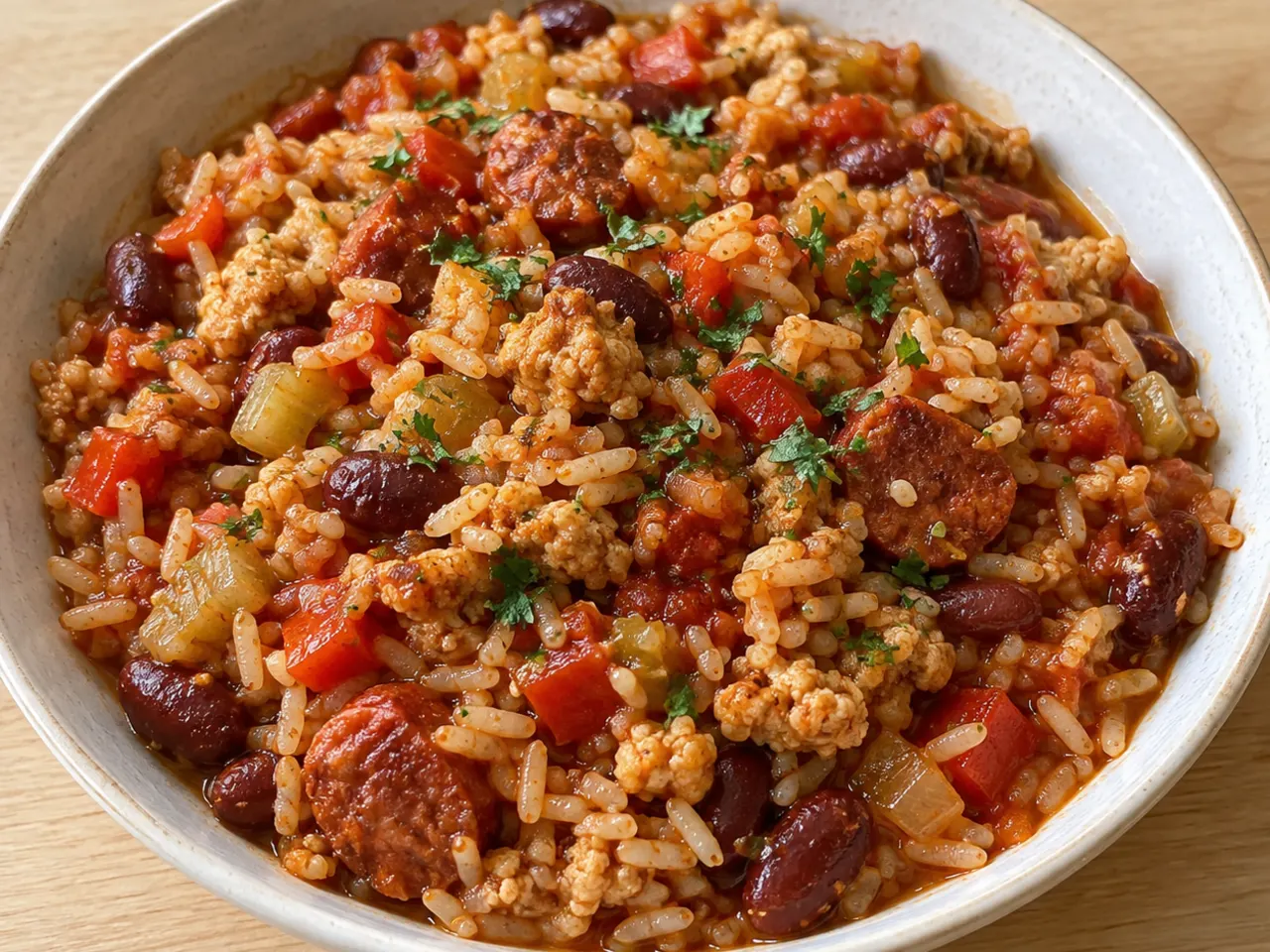
Saturday: lentil Bolognese with around 100 g beef spread through each person's portion
Sunday: chicken curry, around 100 g chicken per person
That is already very close to the reference amounts without making meat disappear from the menu.
Fish, eggs and dairy are separate categories in the Planetary Health Diet, so they are not included in that 300-ish gram weekly meat total.
Spend less on quantity
Using less meat can cut the cost of these meals and leave room in the budget for meat you prefer when you do buy it. A higher price does not, by itself, mean a lower environmental impact: production footprints vary, and beef generally has a larger footprint than poultry or legumes [Poore and Nemecek, 2018].
It can also mean that organic food can be put on the menu. It's way more expensive but since we're (trying) eating less meat, we can also put the focus on the quality of the meat.
Processed Meat Deserves Its Own Line
A rasher of bacon and a piece of fresh chicken are not interchangeable just because both count as meat.
Processed meat includes products preserved by methods such as curing, smoking, salting or fermentation ; for example bacon, many sausages, salami and certain deli meats.
The World Cancer Research Fund concludes that there is convincing evidence linking processed meat consumption with colorectal cancer and recommends consuming very little, if any. Red meat is treated somewhat differently: it can provide protein, iron, zinc and vitamin B12, but intake is recommended in moderation. [World Cancer Research Fund]
So if you want to keep meat in a planetary-health-style diet, fresh poultry and occasional unprocessed red meat make more sense as the default than making processed meat a daily habit.
Less Meat Does Not Have to Mean Less Protein
Meat is protein-dense, but it is far from the only way to build a protein-rich meal.
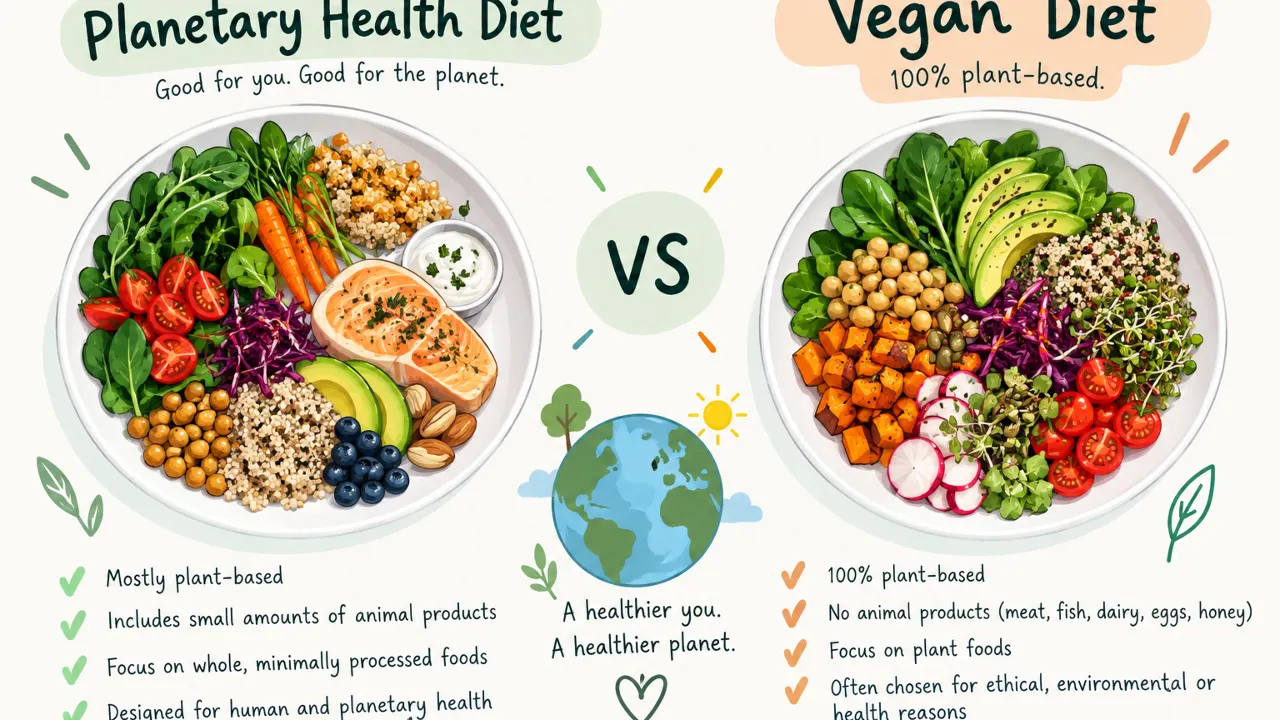
The Planetary Health Diet gives a large role to legumes, nuts, seeds and whole grains, alongside optional amounts of dairy, eggs, fish and meat.
Lentils, chickpeas, beans, peas, soy foods, nuts and seeds can therefore do more of the everyday work, while animal foods become one ingredient among several rather than the foundation of every meal.
For people with higher protein targets, those foods can also be combined with foods such as yoghurt, skyr, cottage cheese, eggs, fish or modest amounts of poultry.
The point is not to find a perfect plant substitute for every piece of meat. It is to diversify where your protein comes from.
What About the Planet?
There is also a reason to care about which meat you eat, not only how much.
Food-production impacts vary considerably between farms and production systems, but the broad differences between foods are substantial. Large global analyses have found that ruminant meat, especially beef, generally requires more land and generates substantially greater greenhouse-gas emissions than poultry, legumes and many other protein sources. [Poore & Nemecek, 2018]
That means reducing a weekly 500 g beef habit is generally more significant than obsessing over tiny differences between two kinds of beans.
It also means that “better quality, less often” can be a useful approach , although labels such as local, organic or premium do not automatically guarantee a lower environmental footprint.
So, How Much Meat Can You Actually Eat?
If you want one simple number to remember, the 2025 Planetary Health Diet reference works out to approximately:
~100 g red meat + ~200 g poultry per person per week.
But treat that as a useful compass, not a weekly meat allowance that has to be filled.
Zero is perfectly compatible with the framework. So is an occasional steak. What matters more is the pattern that surrounds it: lots of vegetables, fruit, legumes, whole grains, nuts and seeds, with animal foods playing a smaller role.
Instead of asking:
“Am I allowed to eat meat?” (No wtf you cow killer)
a more useful question is:
“Does meat need to be the main ingredient in this meal?”
Quite often, the answer is no.
And that leaves plenty of room for it to be genuinely enjoyable when it is.




Comments
Be the first to comment 👇