
7 days · Breakfast, lunch & dinner · For 4 · 100 g+ protein per adult a day
7-day high-protein meal plan for a family of 4: 100 g+ protein per adult a day
A week of protein-rich meals selected with our meal planner: every day brings at least 100 g of protein per adult-sized portion, for about 2,000 kcal. Each day shows its protein per person. Quantities use four adult-sized portions; a young child usually eats half to three-quarters of one, so adjust them for your household. The 100 g is an adult figure: children need far less protein (about 20 g a day at six). This is a general example, not a personalised nutrition prescription.
Your week at a glance
Each meal shows one person's portion. Recipe links open with the ingredients scaled for the whole household. Allergens are listed once for the week, with the dishes that contain them, at the bottom of this page.
Monday
About 1 h 40 min of cooking
115 g of protein per person
Snack
AppleAbout 100 g per person
Before you start
Breakfast
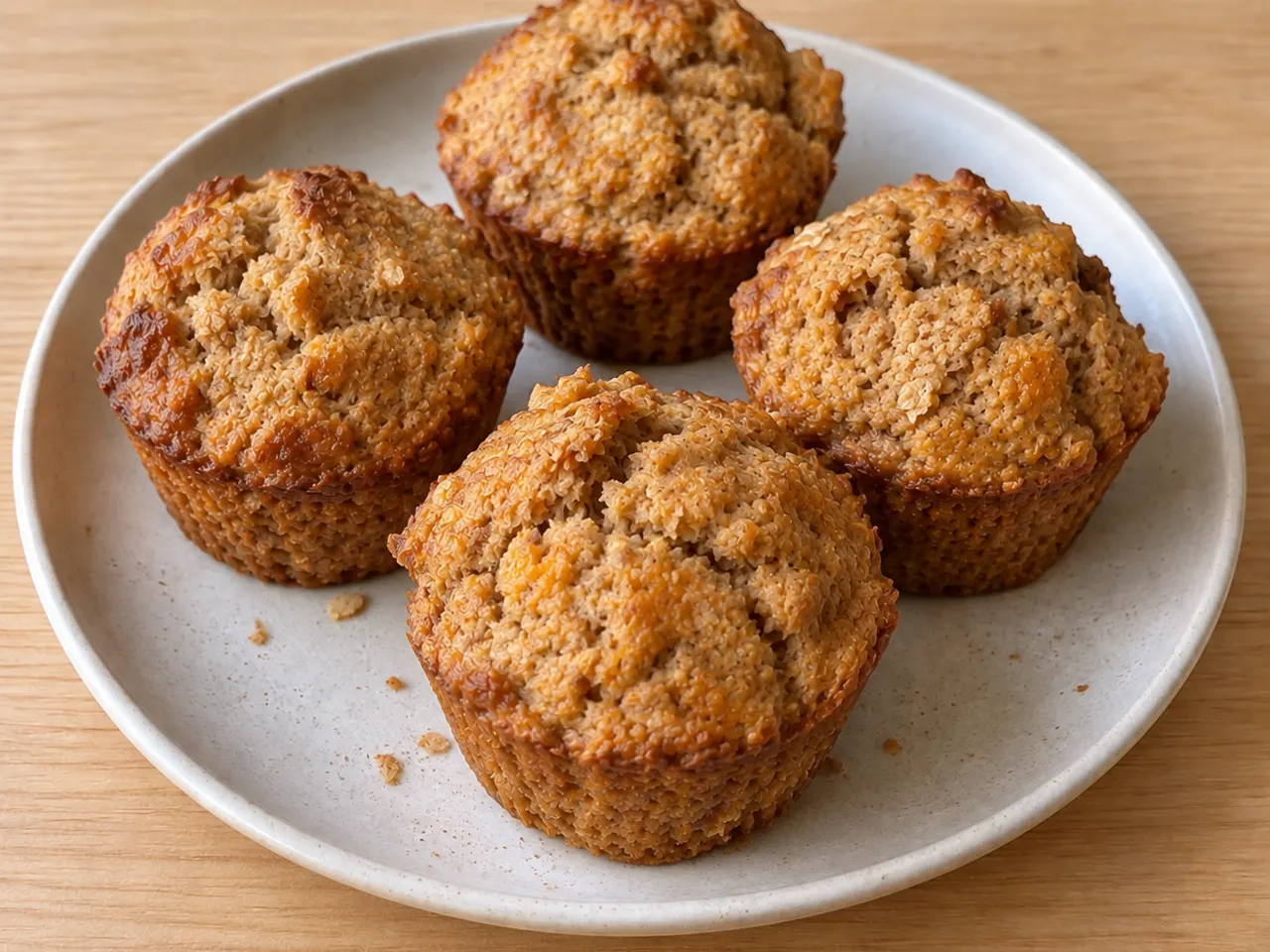
Soft Apricot Oat MuffinsFor the first day's breakfast. Cook about 2.4 kg for 2 meals: the recipe at 19 servings · about 105 g left to keep. Ready in 59 min.
Tuesday
About 1 h 16 min of cooking
122 g of protein per person
Snack
RaspberriesAbout 100 g per person
Wednesday
About 13 min of cooking
122 g of protein per person
Lunch
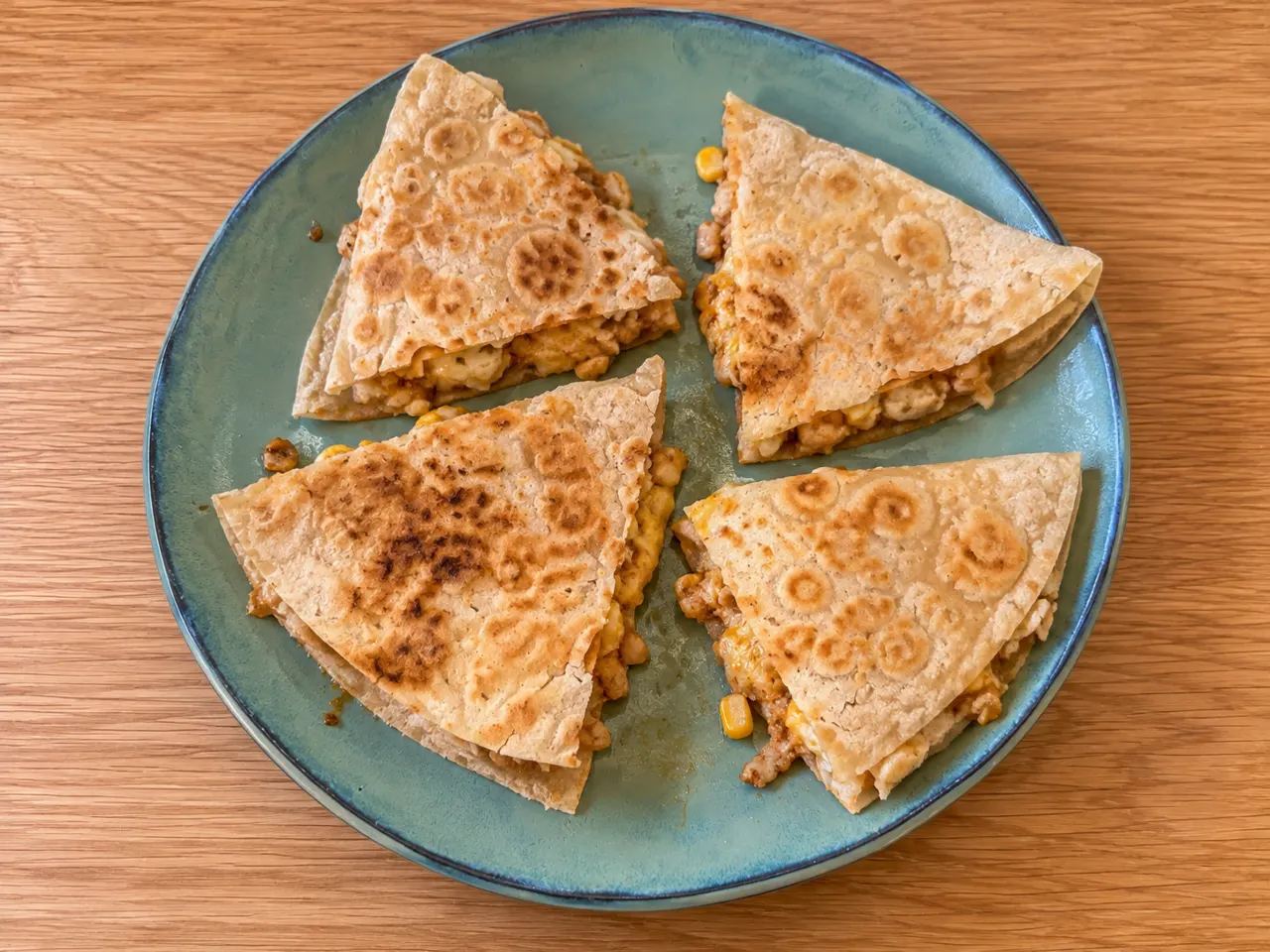
Grated Tofu, White Bean and Emmental QuesadillasAbout 350 g per person
Already cooked · enjoy the leftovers
Snack
BlueberryAbout 100 g per person
Thursday
About 1 h 40 min of cooking
160 g of protein per person
Breakfast
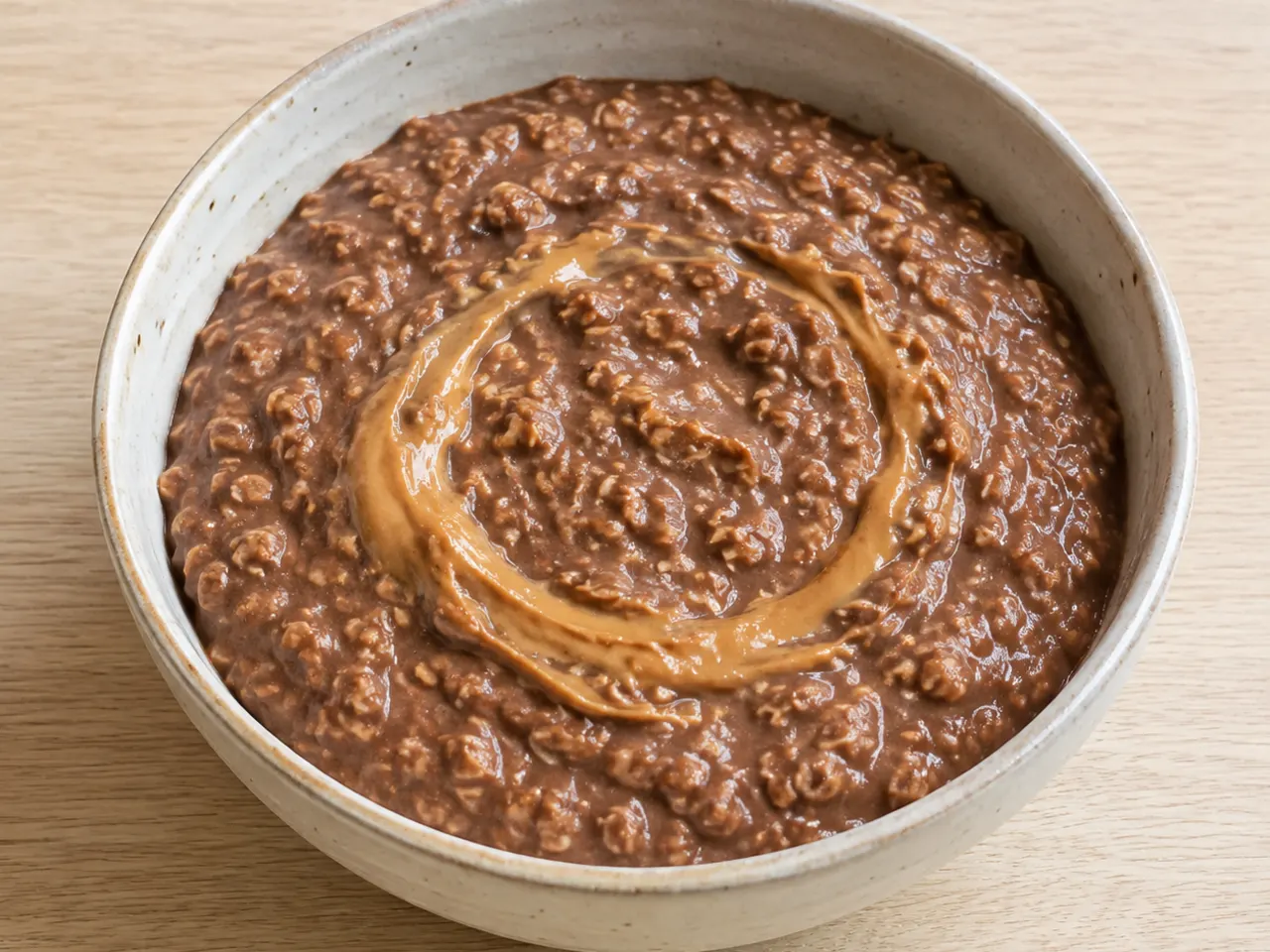
Chocolate Peanut Butter Silken Tofu PorridgeAbout 550 g per person
Already cooked · enjoy the leftovers
Lunch
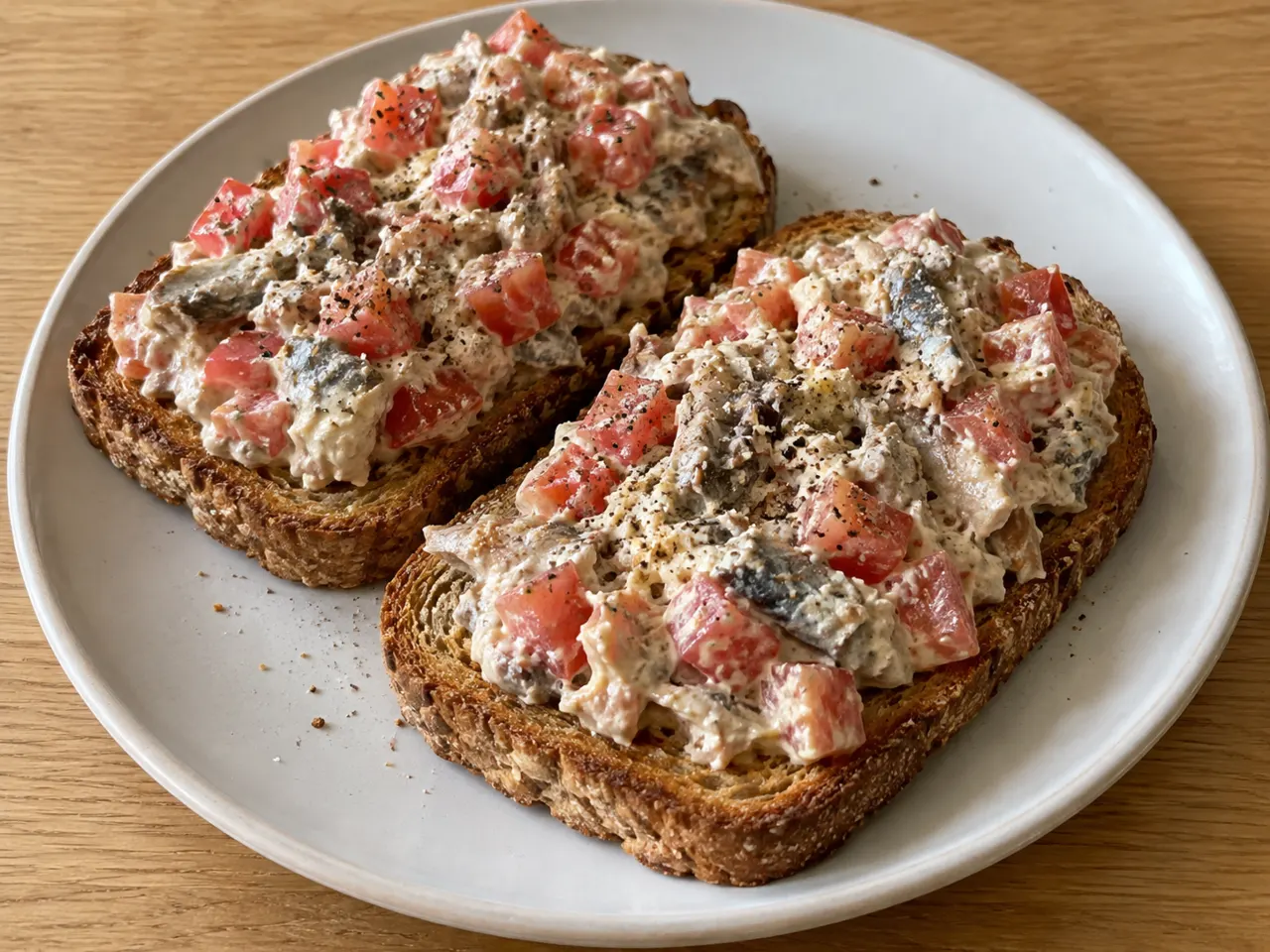
Sardine Salad Toast with Tomato and SkyrAbout 740 g per person
Already cooked · enjoy the leftovers
Snack
AppleAbout 100 g per person
This evening, for tomorrow
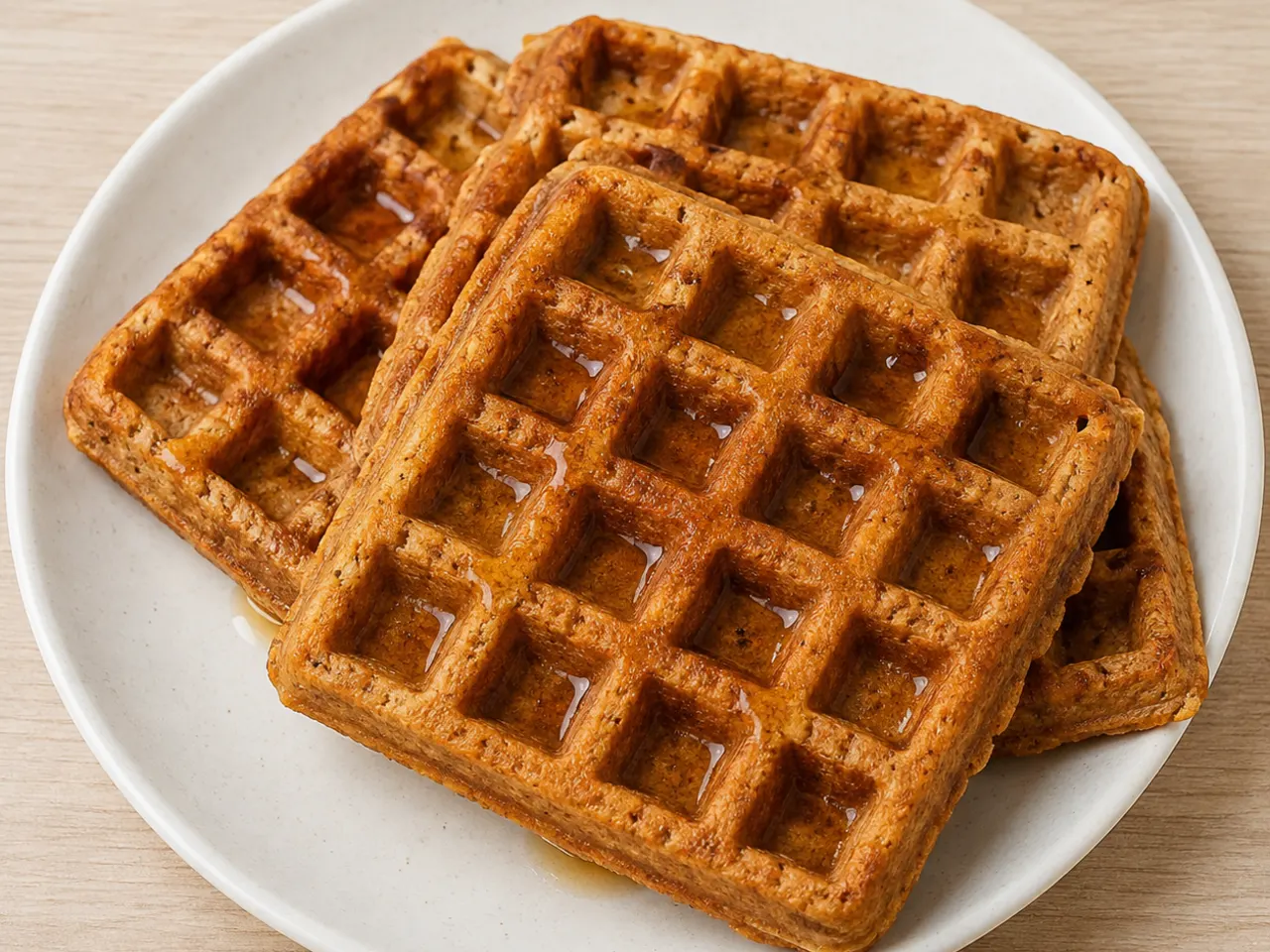
Breakfast
Protein Waffles with Lupin and Nuts FlourFor tomorrow's breakfast. Cook about 2.1 kg for 2 meals: the recipe at 12 servings. Ready in 40 min.
Friday
About 1 h 35 min of cooking
123 g of protein per person
Lunch
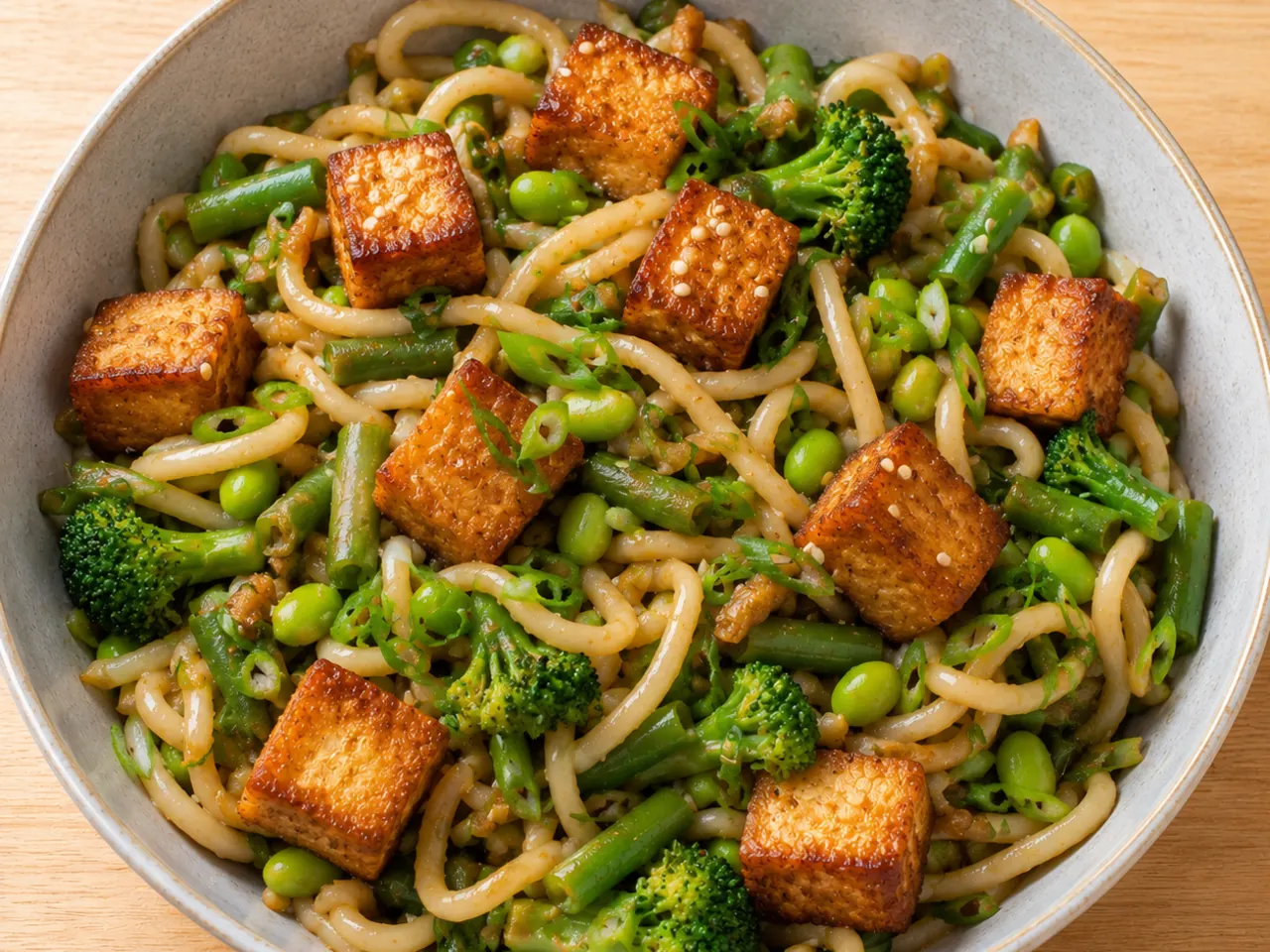
Crispy Tofu Udon with Edamame, Green Beans and BroccoliAbout 750 g per person
Already cooked · enjoy the leftovers
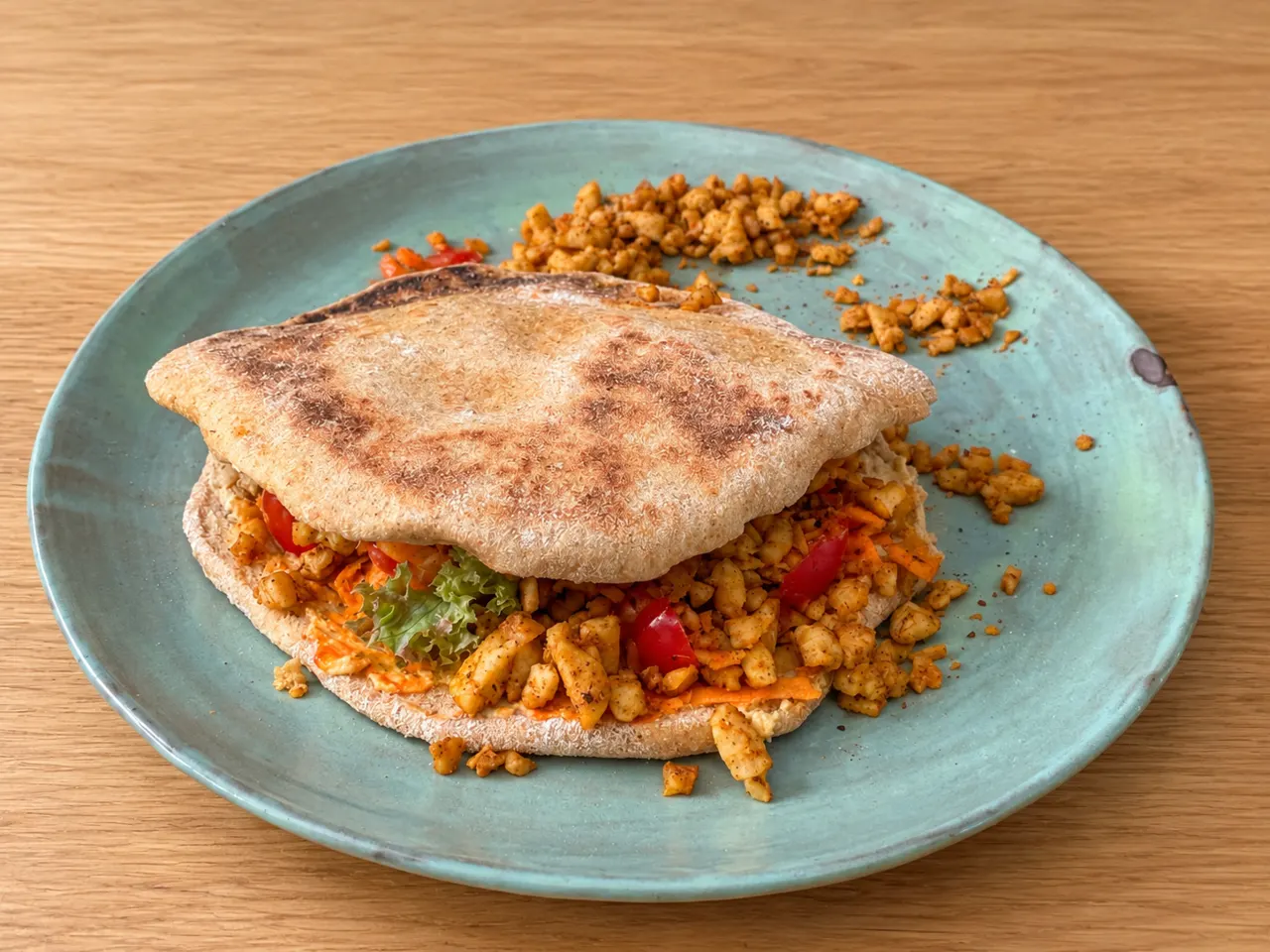
Snack
PearAbout 100 g per person
This evening, for tomorrow
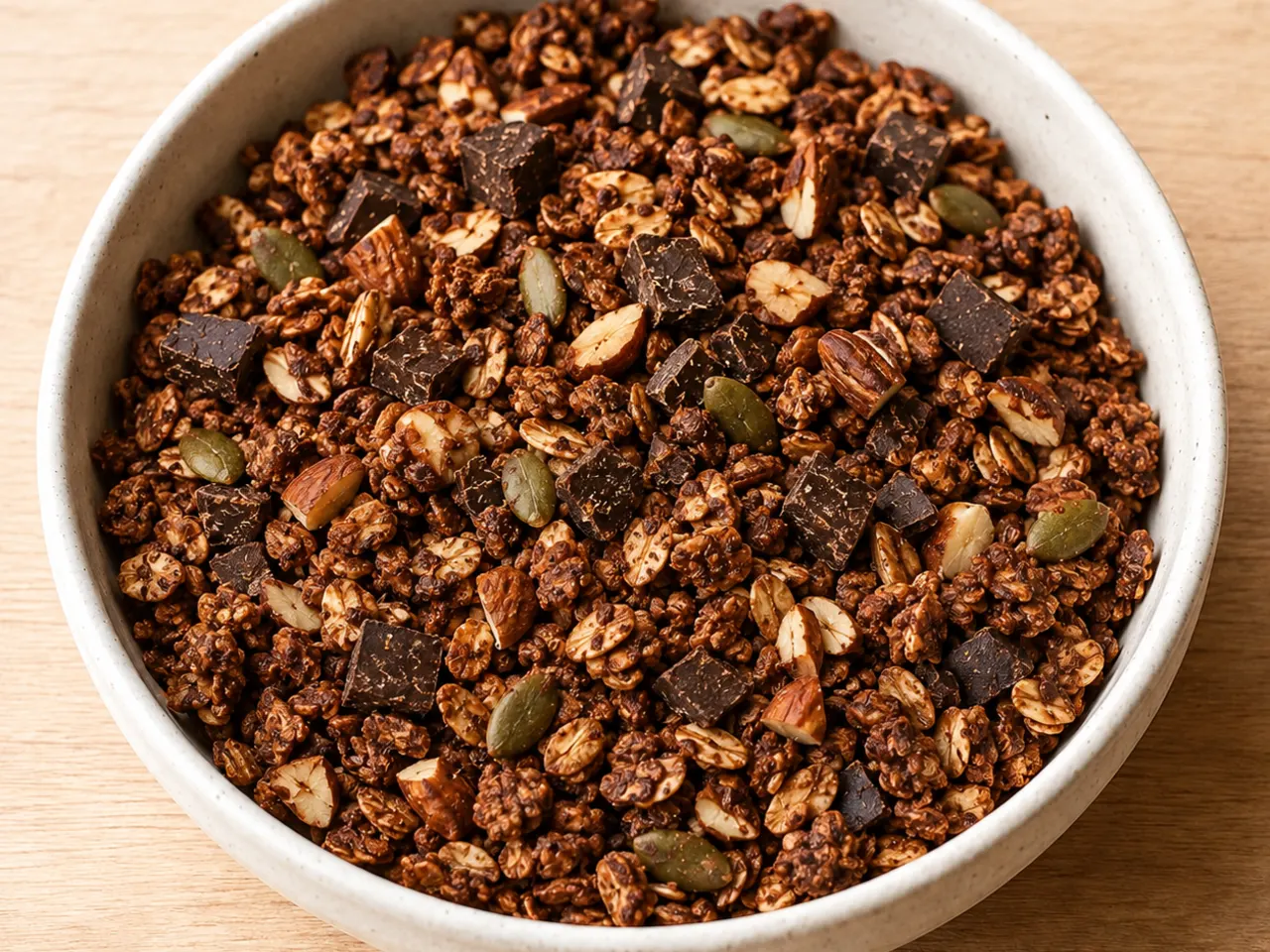
Component recipe
Crispy Dark Chocolate GranolaMake 1 batch (13 portions): about 4 used this week, about 9 to freeze or keep. Ready in 1 h 10 min.
Saturday
About 55 min of cooking
113 g of protein per person
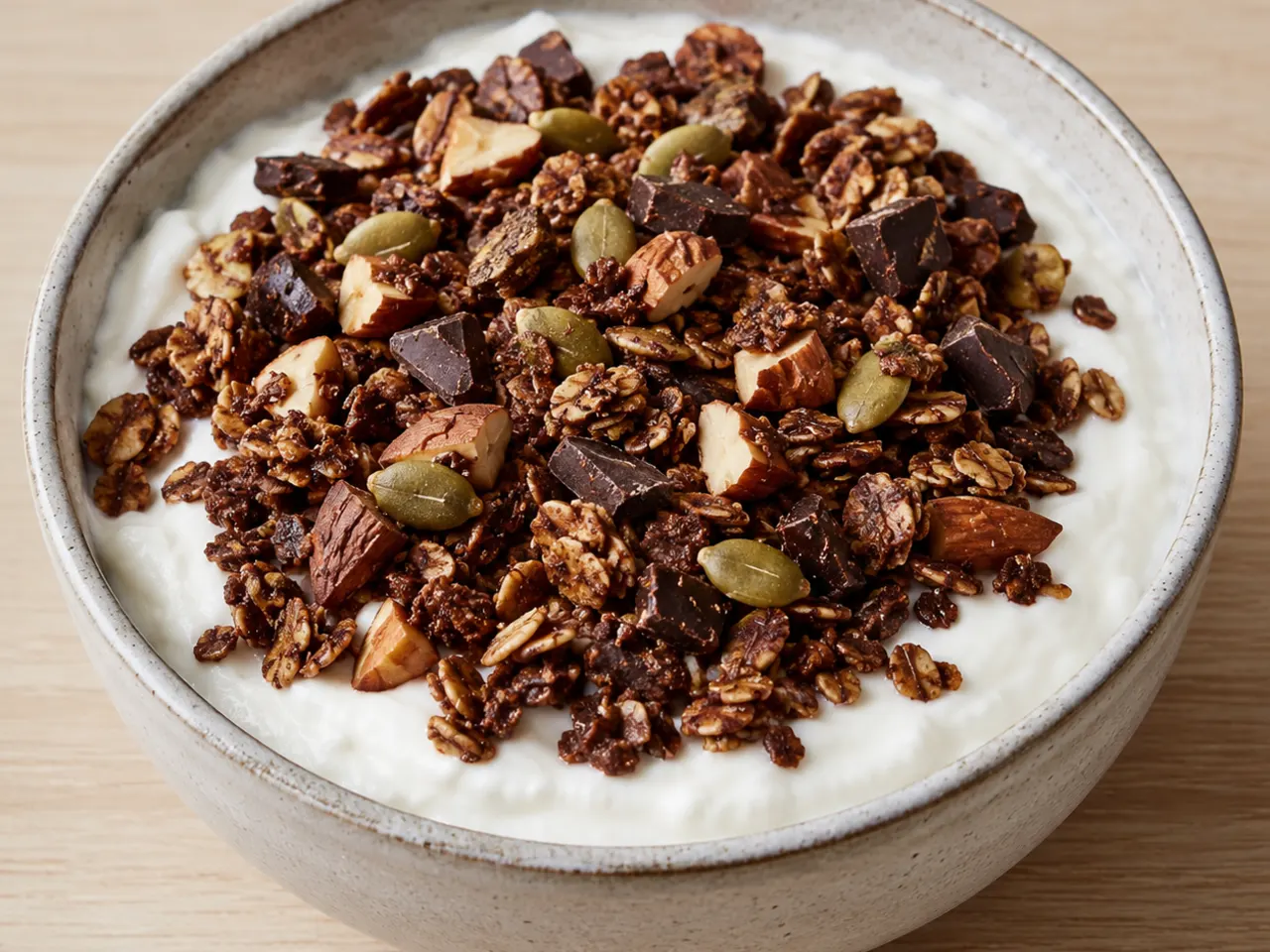
Snack
AppleAbout 100 g per person
Sunday
About 35 min of cooking
104 g of protein per person
Breakfast
Protein Waffles with Lupin and Nuts FlourAbout 250 g per person
Already cooked · enjoy the leftovers
Lunch
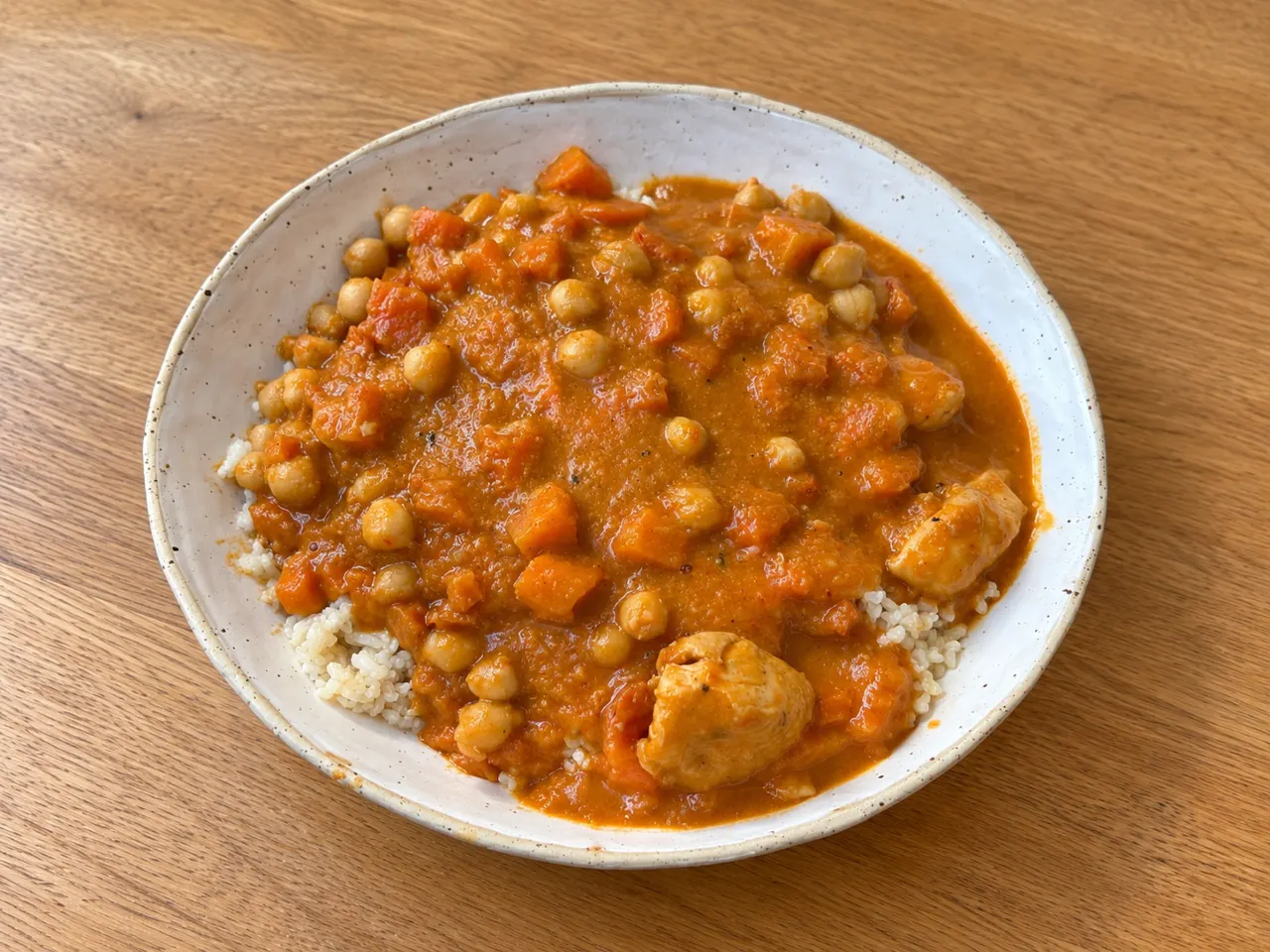
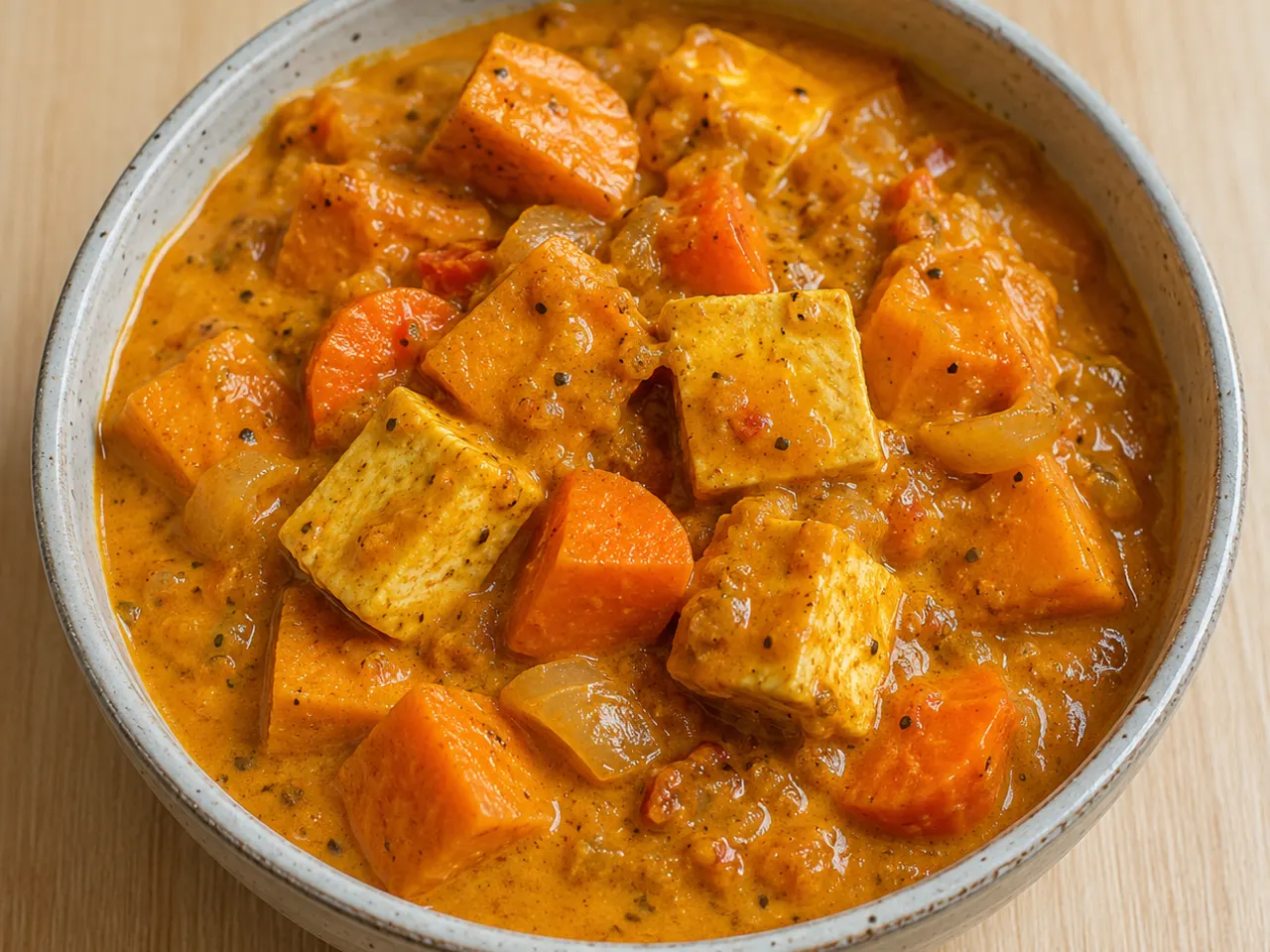
Creamy Sweet Potato & Paneer Curry with ChickpeasAbout 690 g per person
Already cooked · enjoy the leftovers
Snack
AppleAbout 100 g per person
Transparent weekly analytics
Feast EAT-Lancet Alignment 2025
Food-pattern alignment, not a measure of overall health. Official targets use the adult 2,400 kcal reference.
Research index
Planetary Health Diet Index
The index behind the lives-saved estimate, applied to the standard adult portion. Shown beside the alignment score, not instead of it.
For scale: adults’ diets averaged 85 worldwide in 2018, and the lives-saved estimate’s headline scenario raises them to 120.
| Component | This plan, per day | Scoring | Points |
|---|---|---|---|
| Whole grains | 155.3 g 0 at 0 g · full from 90 g | 0 at 0 g · full from 90 g | 10/10 |
| Whole fruits | 134 g 0 at 0 g · full from 200 g | 0 at 0 g · full from 200 g | 6.7/10 |
| Non-starchy vegetables | 429.5 g 0 at 0 g · full from 300 g | 0 at 0 g · full from 300 g | 10/10 |
| Nuts and seeds | 33 g 0 at 0 g · full from 50 g | 0 at 0 g · full from 50 g | 6.6/10 |
| Legumes and soy foods | 386.6 g 0 at 0 g · full from 150 g | 0 at 0 g · full from 150 g | 10/10 |
| Fish and shellfish | 75.4 g 0 at 0 g · full from 28 g | 0 at 0 g · full from 28 g | 10/10 |
| Unsaturated oils | 16.1 g · 7% of energy 0 at 3.5% · full from 21% of energy | 0 at 3.5% · full from 21% of energy | 2/10 |
| Starchy vegetables | 48.1 g full up to 50 g · 0 from 200 g | full up to 50 g · 0 from 200 g | 10/10 |
| Dairy foods | 162.7 g full up to 250 g · 0 from 1,000 g | full up to 250 g · 0 from 1,000 g | 10/10 |
| Red and processed meat | 0 g full up to 14 g · 0 from 100 g | full up to 14 g · 0 from 100 g | 10/10 |
| Poultry | 19.5 g full up to 29 g · 0 from 100 g | full up to 29 g · 0 from 100 g | 10/10 |
| Eggs | 18.6 g full up to 13 g · 0 from 120 g | full up to 13 g · 0 from 120 g | 9.5/10 |
| Saturated oils and fats | 0 g · 0% of energy full at 0% · 0 from 10% of energy | full at 0% · 0 from 10% of energy | 10/10 |
| Added sugar | 6.8 g · 1.3% of energy full up to 5% · 0 from 25% of energy | full up to 5% · 0 from 25% of energy | 10/10 |
| Total | 124.8/140 |
How the index is calculated
- 140 points, 10 per component. A component earns points in proportion to where the daily amount sits between the amount worth 0 points and the amount worth all 10; beyond either end it stays at 0 or 10. Foods to eat more of gain points as amounts rise, foods to limit lose them.
- Fixed amounts. Amounts are the plan’s average grams a day for one standard adult portion, from the same food groups as the alignment score. The thresholds are the published index’s and, unlike the alignment targets, are not scaled to energy needs.
- Shares of energy. Oils and added sugar are scored as a percent of the energy the plan’s recipes provide (2,059 kcal a day for the standard portion), with fats at 9 kcal per gram and sugar at 4. When energy data covers less than 90% of the ingredient weight, they are not scored and the total waits.
- Adapted to the planner’s food groups. The published index scores legumes and soy foods apart, 5 points each, full from 100 g and 50 g. The planner does not tell soy from other legumes, so they share 10 points, full from 150 g: the same result when soy is a third of legumes, as in the EAT-Lancet reference. Whole grains earn full points from 90 g for men and 75 g for women; the official view uses 90 g. Saturated oils and fats are palm and coconut oil, lard, tallow and butter, counted as pure fat. The published index adds the sugar of fruit juice to added sugar; here only ingredients filed as added sugars count.
- What it is not. A research index of how closely a diet follows the Planetary Health Diet, not a prediction of anyone’s health.
Source: Bui, L. P. et al. American Journal of Clinical Nutrition 120, 80–91 (2024), “Planetary Health Diet Index and risk of total and cause-specific mortality in three prospective cohorts”. The same index scored diets in 171 countries for the lives-saved estimate.
Keep your week close
Your weekly plan & shopping list
Get a printable weekly PDF and a separate shopping list, with quantities for this exact menu. Free, and no account needed: we email you both.
Reference packages for your country. Missing formats keep recipe quantities. Check package sizes in store.
We use your address to send the weekly plan and the shopping list, nothing else unless you tick the newsletter. Privacy policy.
Want to swap meals? Create a free account to open this week in the meal planner, or sign in to download directly.
Make it work for your household
Quantities use 4 adult-sized portions; a young child usually eats half to three-quarters of one. This example includes three meals a day; add snacks if you need them. Allergens are read from each recipe's ingredients and listed below: always check packaging, and adapt portions to your household. Component recipes such as buns or granola are made the day before the meals that use them, and so are breakfasts that take more than 20 minutes; dried beans soak the night before. For more ideas, browse our recipes or try another week.
Allergens this week GlutenSoyMilkTree nutsPeanutsEggsFishSesameSulphitesMustardLupin Dishes
- Gluten
- Soft Apricot Oat MuffinsMon and Wed
- Chocolate Peanut Butter Silken Tofu PorridgeTue and Thu
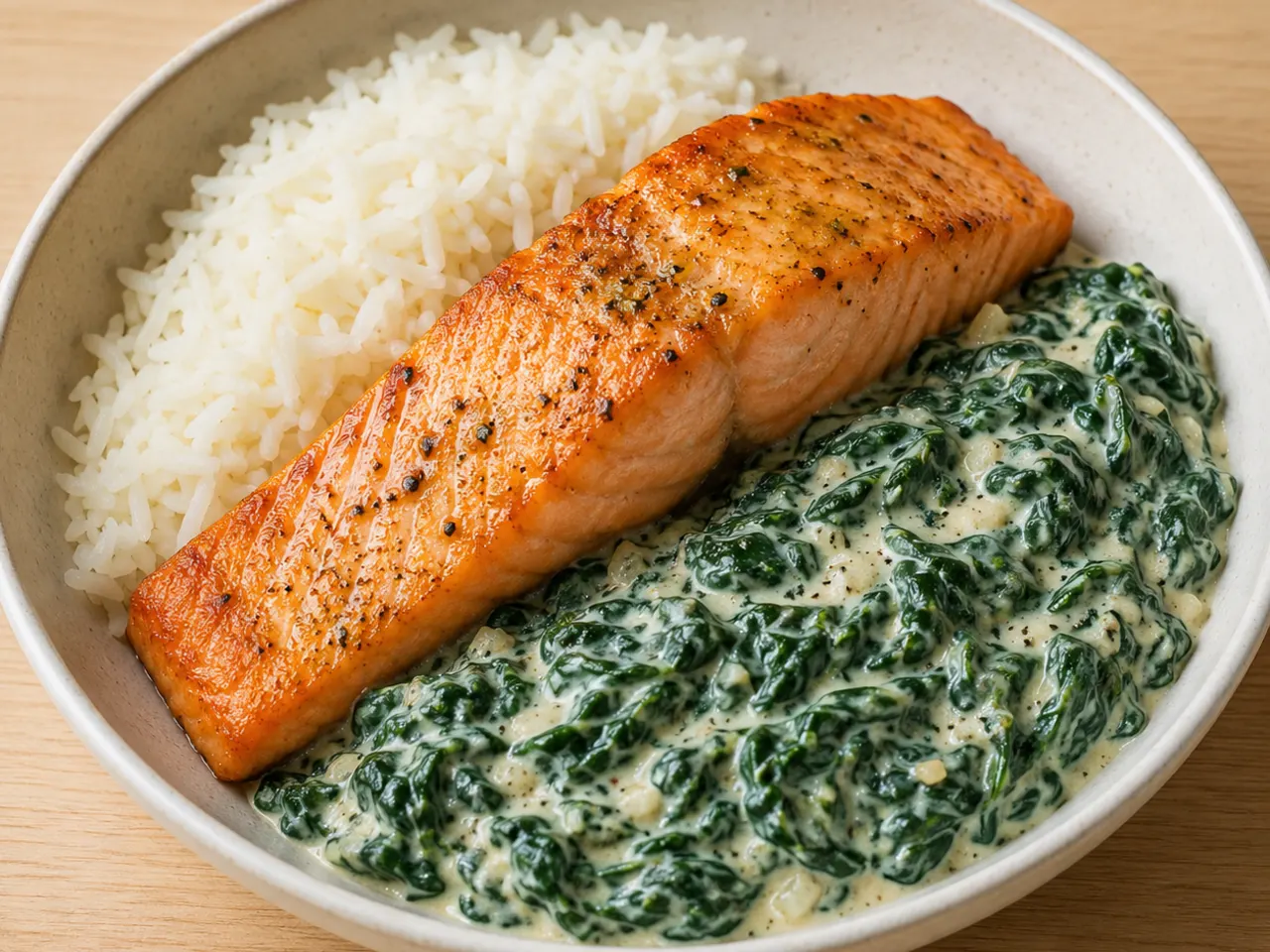
- Pan-Seared Salmon with Rice and Creamy Oat SpinachTue
- Grated Tofu, White Bean and Emmental QuesadillasTue and Wed
- Sardine Salad Toast with Tomato and SkyrWed and Thu
- Crispy Tofu Udon with Edamame, Green Beans and BroccoliThu and Fri
- Protein Waffles with Lupin and Nuts FlourFri and Sun
- Tex-Mex Tempeh Pitas with HummusFri and Sat
- Plain Skyr with Crunchy GranolaSat
- Soy
- Soft Apricot Oat MuffinsMon and Wed
- Chocolate Peanut Butter Silken Tofu PorridgeTue and Thu
- Grated Tofu, White Bean and Emmental QuesadillasTue and Wed
- Crispy Tofu Udon with Edamame, Green Beans and BroccoliThu and Fri
- Tex-Mex Tempeh Pitas with HummusFri and Sat
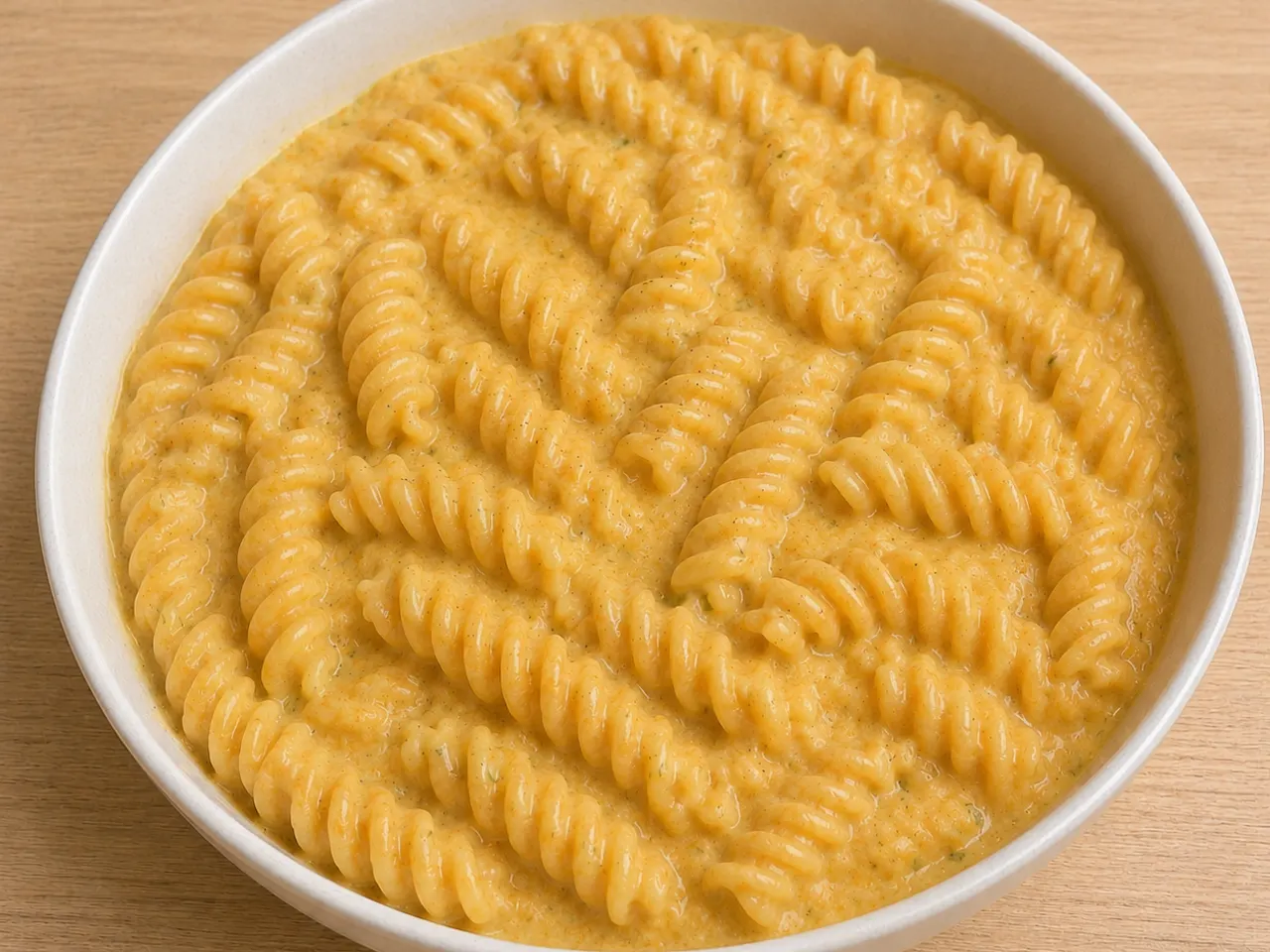
- Red Lentil Fusilli with Silken Tofu Vegetable SauceSun
- Milk
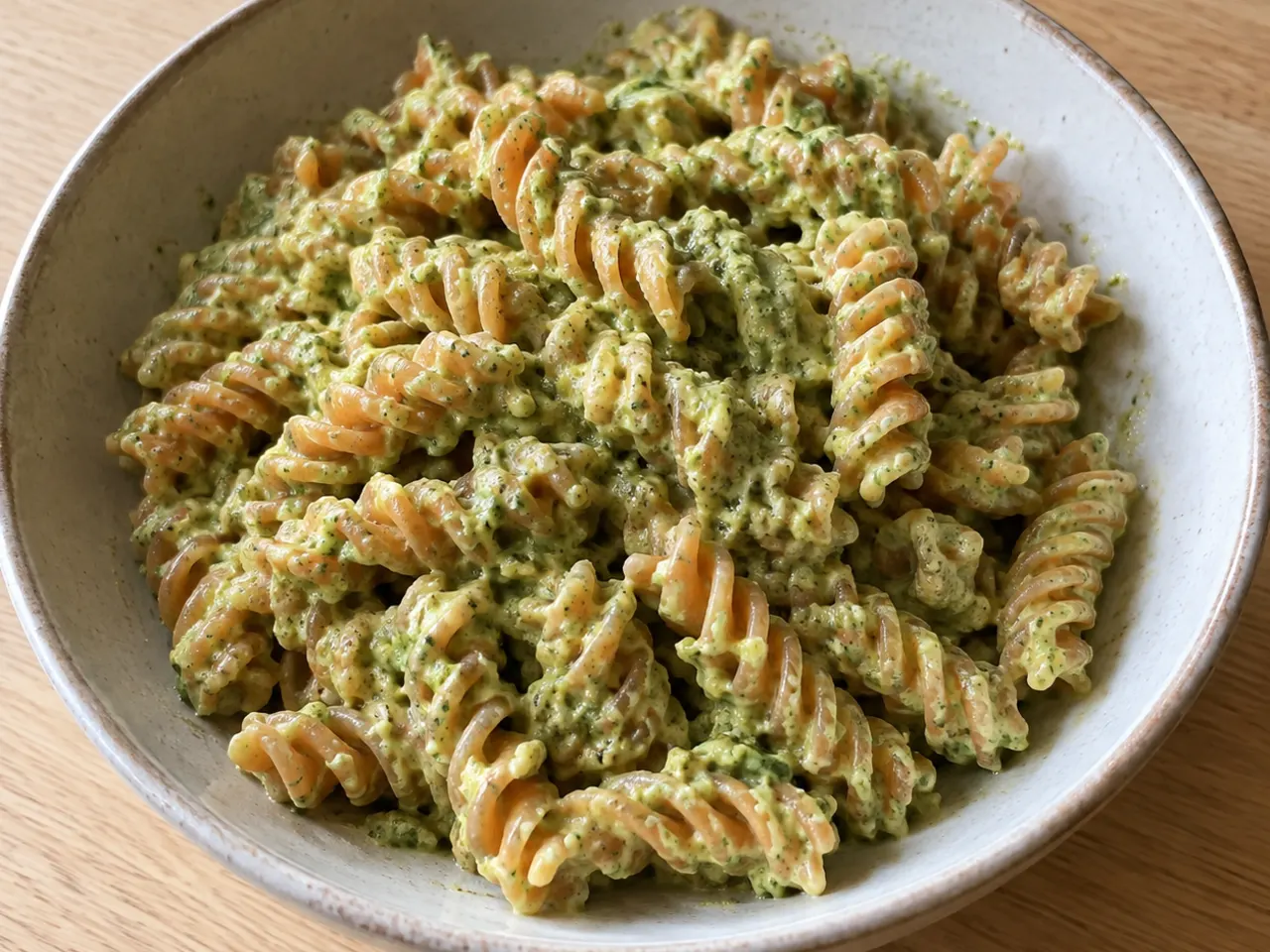
- Red Lentil Pasta with Cottage Cheese Basil PestoMon
- Grated Tofu, White Bean and Emmental QuesadillasTue and Wed
- Sardine Salad Toast with Tomato and SkyrWed and Thu
- Protein Waffles with Lupin and Nuts FlourFri and Sun
- Plain Skyr with Crunchy GranolaSat
- Creamy Sweet Potato & Paneer Curry with ChickpeasSat and Sun
- Tree nuts
- Peanuts
- Fish
- Sesame
- Sulphites
- Mustard
Read from each recipe's ingredients, nested recipes included. This is a reading aid, not a label: always check packaging.