
Sardines in oil
Canned drained with bone Atlantic sardine (in oil)
Regional seasonality
Available all year, with no season to wait for. — Northern North America
- Jan
- Feb
- Mar
- Apr
- May
- Jun
- Jul
- Aug
- Sep
- Oct
- Nov
- Dec
Nutritional values (per 100g)
- Calories208 kcal
- Proteins24.6 g
- Carbohydrates0 g
- Fats11.5 g
- Fiber0 g
- Sodium0.307 g
- Sugars0 g
- CO₂ footprint300 g
Per 100 g
Saturated fat, calcium and iron. Open the full profile for every vitamin, mineral and fatty acid reported.
These are the nutrient amounts available for 100 g of this ingredient. A missing nutrient means that no value was reported—not that the amount is zero.
- Saturated fat 1.53 g7.6% of daily maximum Codex NRV-NCD: maximum 20 g/day
- Calcium 382 mg38% of daily reference Codex NRV-R: 1000 mg/day
- Iron 2.92 mg13–21% of daily reference Codex NRV-R: 14–22 mg/day
Full nutrient profile 91 nutrients
Minerals Calcium, iron, potassium and more 8 nutrients
- Magnesium 39 mg13% of daily reference Codex NRV-R: 310 mg/day
- Phosphorus 490 mg70% of daily reference Codex NRV-R: 700 mg/day
- Potassium 397 mg11% of daily target Codex NRV-NCD: target 3500 mg/day
- Sodium 307 mg15% of daily maximum Codex NRV-NCD: maximum 2000 mg/day
- Zinc 1.31 mg9.4–12% of daily reference Codex NRV-R: 11–14 mg/day
- Copper 0.186 mg21% of daily reference Codex NRV-R: 900 µg/day
- Manganese 0.108 mg3.6% of daily reference Codex NRV-R: 3 mg/day
- Selenium 52.7 µg88% of daily reference Codex NRV-R: 60 µg/day
Vitamins Fat- and water-soluble vitamins 25 nutrients
- Retinol 32 µg
- Retinol activity equivalents 32 µg4% of daily reference Codex NRV-R: 800 µg RAE/day
- Beta carotene 0 µg
- Alpha carotene 0 µg
- Alpha-tocopherol 2.04 mg23% of daily reference Codex NRV-R: 9 mg α-tocopherol/day
- Vitamin D (International Units) 93.2 IU
- Vitamin D (D2 + D3) 2.33 µg16–47% of daily reference Codex NRV-R: 5–15 µg/day
- Beta cryptoxanthin 0 µg
- Lycopene 0 µg
- Lutein and zeaxanthin 0 µg
- Vitamin C 0 mg0% of daily reference Codex NRV-R: 100 mg/day
- Thiamine 0.08 mg6.7% of daily reference Codex NRV-R: 1.2 mg/day
- Riboflavin 0.227 mg19% of daily reference Codex NRV-R: 1.2 mg/day
- Niacin (nicotinic acid) preformed 5.25 mg35% of daily reference Codex NRV-R: 15 mg NE/day
- Total niacin equivalent 9.85 mg NE66% of daily reference Codex NRV-R: 15 mg NE/day
- Pantothenic acid 0.511 mg10% of daily reference Codex NRV-R: 5 mg/day
- Vitamin B-6 0.167 mg13% of daily reference Codex NRV-R: 1.3 mg/day
- Biotin 9.1 µg30% of daily reference Codex NRV-R: 30 µg/day
- Total folacin 7.7 µg
- Vitamin B-12 8.94 µg373% of daily reference Codex NRV-R: 2.4 µg/day
- Choline, total 75 mg
- Vitamin K (phylloquinone) 2.6 µg
- Folic acid 0 µg
- Naturally occurring folate 7.7 µg
- Dietary folate equivalents 7.7 µg1.9% of daily reference Codex NRV-R: 400 µg DFE/day
Fatty acids Saturated and unsaturated fatty acids 27 nutrients
- Cholesterol 142 mg
- Fatty acids, trans, total 0 g
- Fatty acids, saturated, 4:0, butanoic 0 g
- Fatty acids, saturated, 6:0, hexanoic 0 g
- Fatty acids, saturated, 8:0, octanoic 0 g
- Fatty acids, saturated, 10:0, decanoic 0 g
- Fatty acids, saturated, 12:0, dodecanoic 0 g
- Fatty acids, saturated, 14:0, tetradecanoic 0.192 g
- Fatty acids, saturated, 16:0, hexadecanoic 0.993 g
- Fatty acids, saturated, 18:0, octadecanoic 0.343 g
- Fatty acids, monounsaturated, 18:1undifferentiated, octadecenoic 2.15 g
- Fatty acids, polyunsaturated, 18:2undifferentiated, linoleic, octadecadienoic 3.54 g
- Fatty acids, polyunsaturated, 18:3undifferentiated, linolenic, octadecatrienoic 0.498 g
- Fatty acids, polyunsaturated, 20:4, eicosatetraenoic 0 g
- Fatty acids, polyunsaturated, 22:6 n-3, docosahexaenoic (DHA) 0.509 g
- Fatty acids, monounsaturated, 16:1undifferentiated, hexadecenoic 0.22 g
- Fatty acids, polyunsaturated, 18:4, octadecatetraenoic 0.125 g
- Fatty acids, monounsaturated, 20:1, eicosenoic 0.423 g
- Fatty acids, polyunsaturated, 20:5 n-3, eicosapentaenoic (EPA) 0.473 g
- Fatty acids, monounsaturated, 22:1undifferentiated, docosenoic 1.08 g
- Fatty acids, polyunsaturated, 22:5 n-3, docosapentaenoic (DPA) 0 g
- Fatty acids, monounsaturated, total 3.87 g
- Fatty acids, polyunsaturated, total 5.15 g
- Fatty acids, polyunsaturated, 18:2 c,c n-6, linoleic, octadecadienoic 3.54 g
- Fatty acids, polyunsaturated, 18:3 c,c,c n-6, g-linolenic, octadecatrienoic 0 g
- Fatty acids, polyunsaturated, 18:3 c,c,c n-3 linolenic, octadecatrienoic 0.49 g
- Fatty acids, polyunsaturated, 20:4 n-6, arachidonic 0 g
Sugars Individual sugars reported in the food 1 nutrient
- Sugars, total 0 g
Other compounds Additional compounds measured by CNF 30 nutrients
- Sucrose 0 g
- Glucose 0 g
- Fructose 0 g
- Lactose 0 g
- Maltose 0 g
- Alcohol 0 g
- Moisture 59.6 g
- Mannitol 0 g
- Sorbitol 0 g
- Caffeine 0 mg
- Theobromine 0 mg
- Galactose 0 g
- Tryptophan 0.276 g
- Threonine 1.08 g
- Isoleucine 1.13 g
- Leucine 2 g
- Lysine 2.26 g
- Methionine 0.729 g
- Cystine 0.264 g
- Phenylalanine 0.961 g
- Tyrosine 0.831 g
- Valine 1.27 g
- Arginine 1.47 g
- Histidine 0.725 g
- Alanine 1.49 g
- Aspartic acid 2.52 g
- Glutamic acid 3.67 g
- Glycine 1.18 g
- Proline 0.87 g
- Serine 1 g
What does “% of daily reference” mean?
Codex Nutrient Reference Values are standard daily values for the general population older than 36 months, designed for nutrition labelling. The percentage shows how much this amount contributes to that daily reference; it is a comparison guide, not a personalised medical target. Vitamin D, iron and zinc use ranges because their Codex values depend on sunlight exposure or dietary absorption. Sodium and saturated fat are daily maximums; potassium is a daily target. A percentage is shown only when the stored nutrient matches the Codex total or equivalent. Codex does not define a separate daily reference for each individual fatty acid.
Read the official Codex CXG 2-1985 referencesDescription
Atlantic sardines canned in oil and drained, eaten with their soft bones, which provide calcium. A rich source of omega-3.
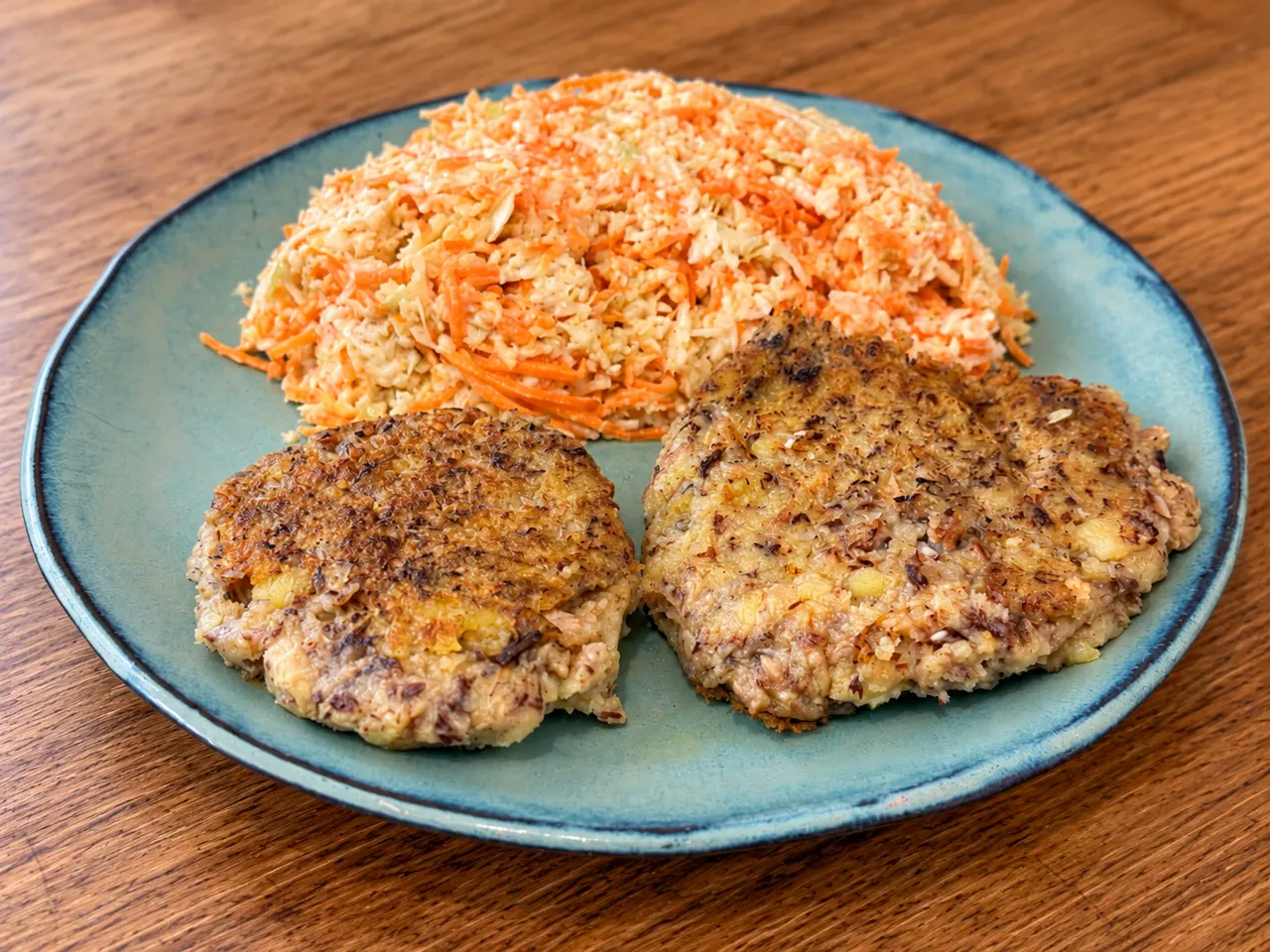
Sardine and Potato Cakes
These pan-fried sardine cakes hold together with mashed potato and a little cornstarch. Serve them with crunchy cabbage and carrot slaw and a sharp lemon-skyr sauce.
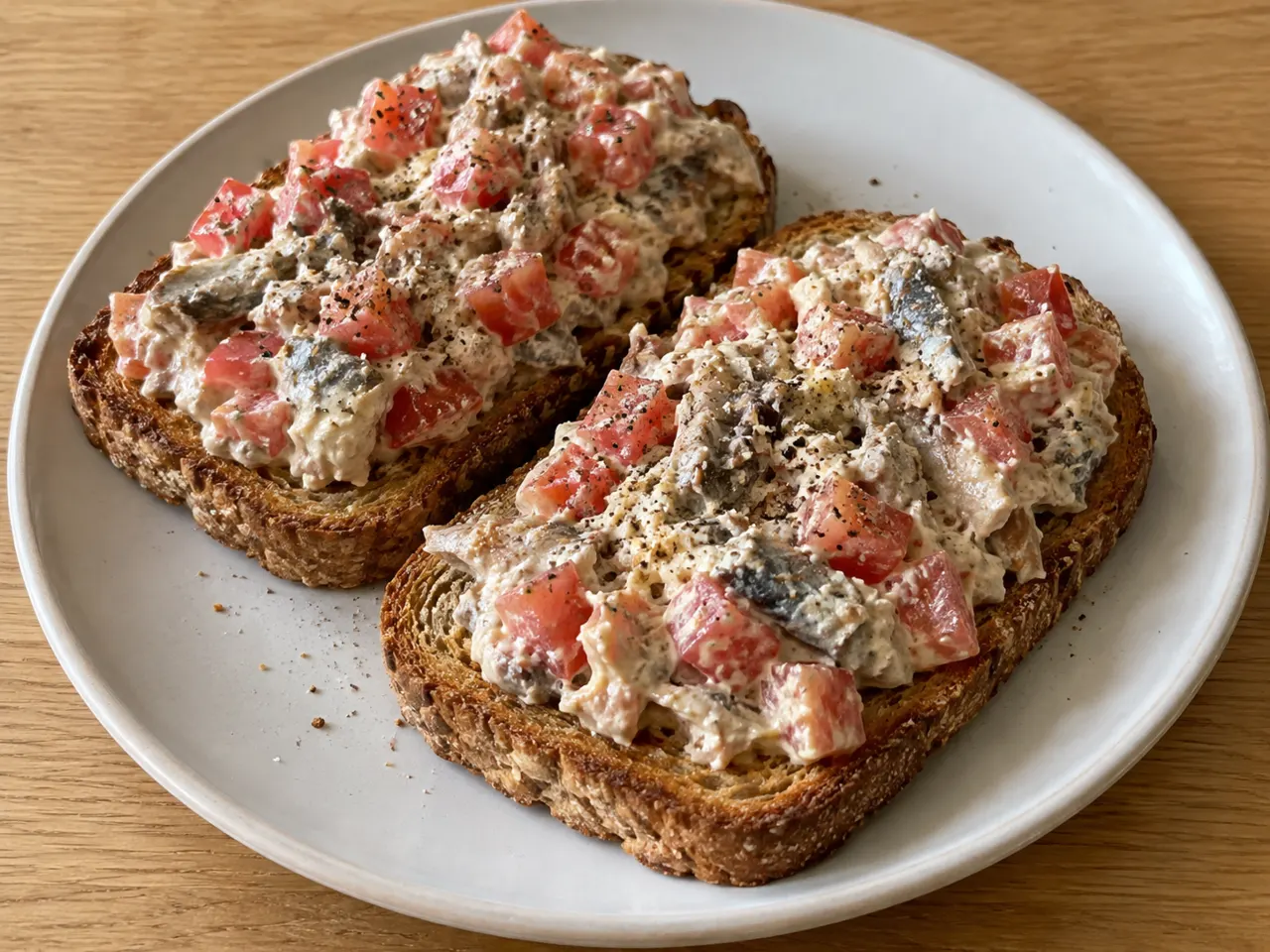
Sardine Salad Toast with Tomato and Skyr
Creamy mashed sardines with skyr and Dijon are folded with juicy diced tomato, then piled onto crisp whole wheat toast. Removing most of the tomato seeds keeps the topping fresh without making the bread soggy.
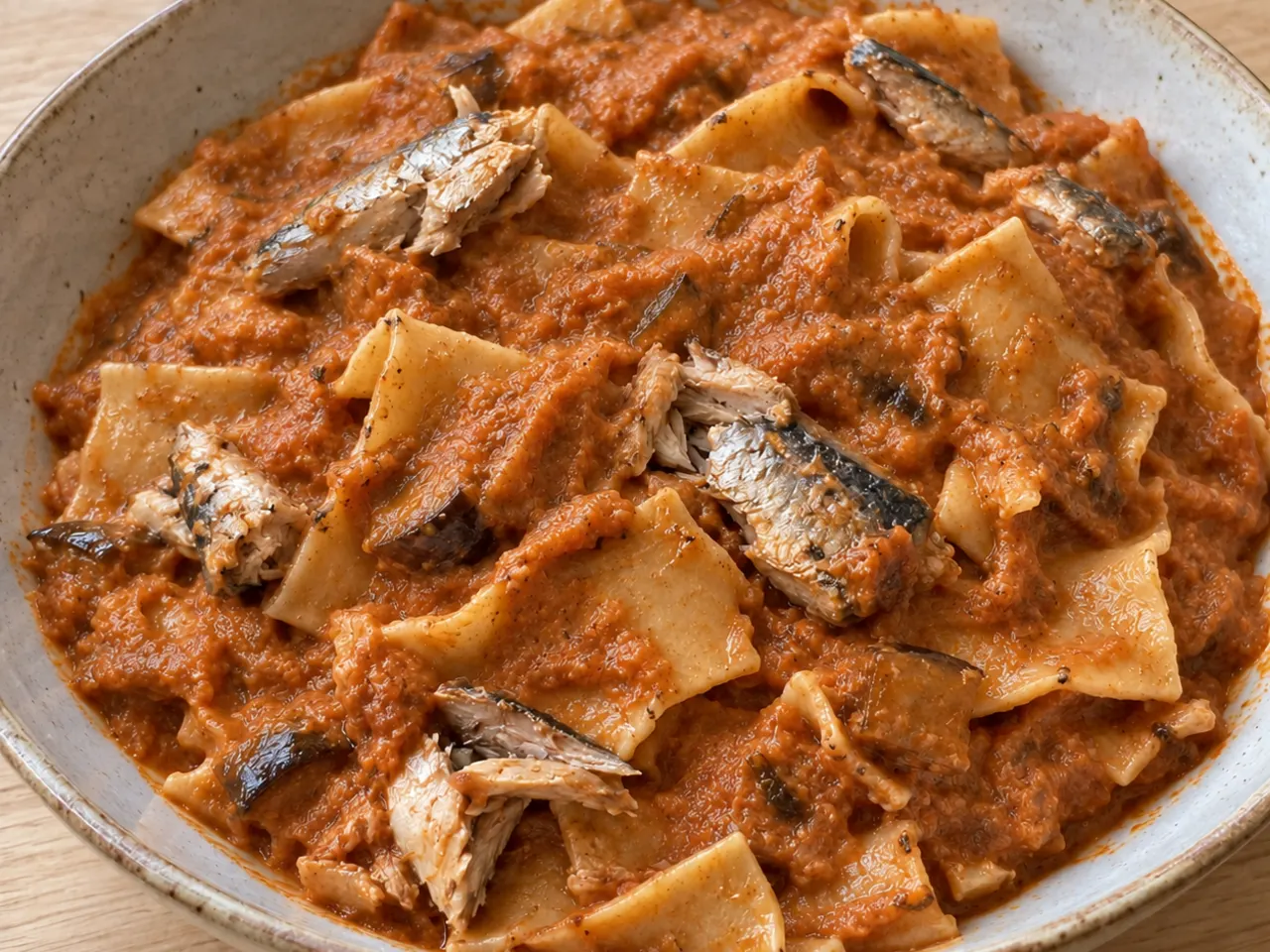
Rough-Cut Lasagna Pasta with Sardines and Roasted Eggplant Sauce
Lasagna sheets broken into uneven ribbons catch a thick sauce of roasted tomatoes, eggplant and onion. Oat cream softens the tomato’s acidity, while sardines added at the end stay in pieces.
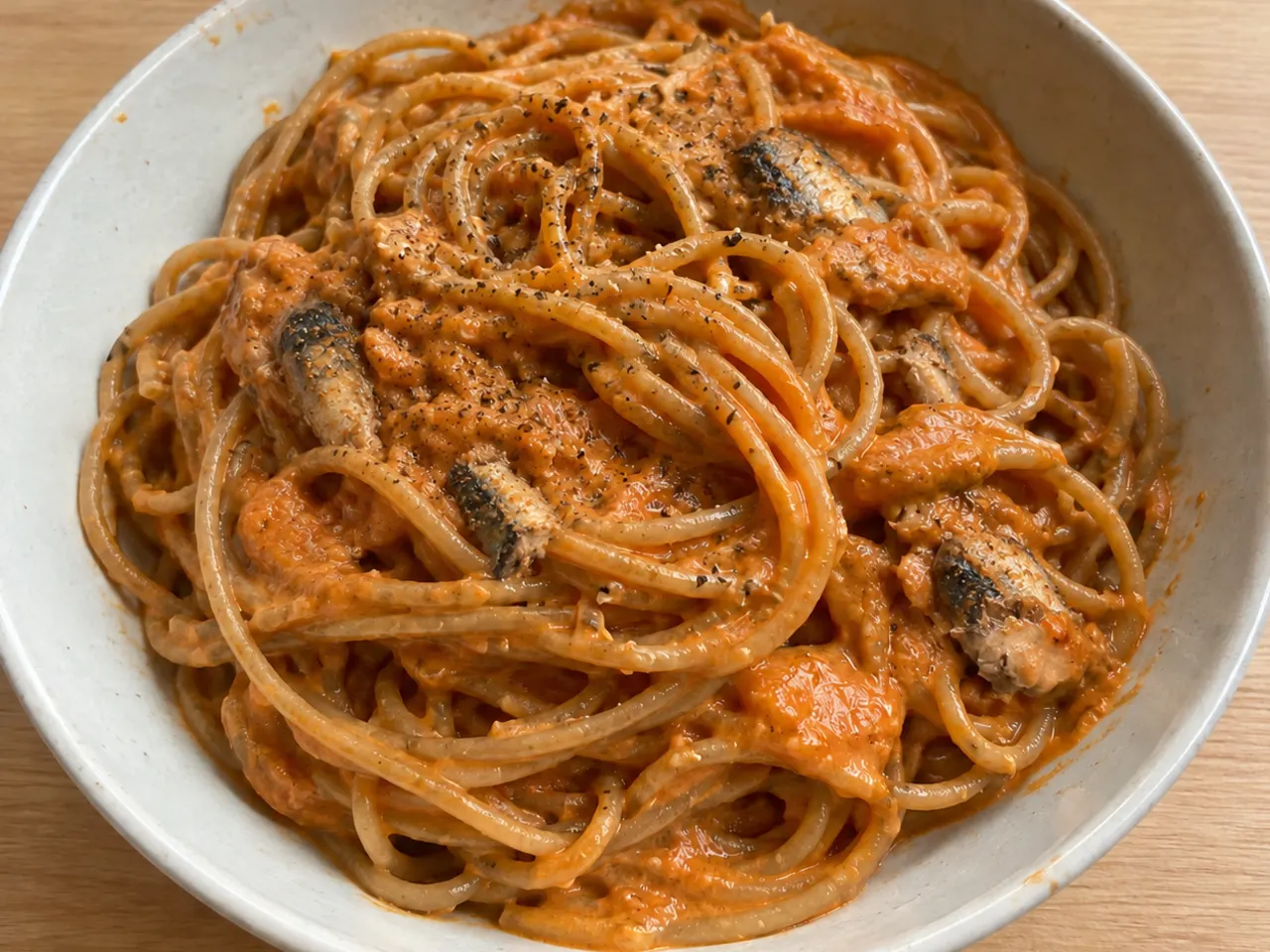
Whole-Wheat Spaghetti with Roasted Tomato Mascarpone Sauce and Sardines
Roasted tomatoes, carrots, onion, and garlic blend into a thick, naturally sweet sauce with mascarpone. Sardines are warmed through at the end so they stay in tender pieces rather than disappearing into the pan.
Start a recipe with it Build your own recipe around Sardines in oil and see its nutrition per serving.