The Pan Aisle Is a Psychological Test
At some point, most of us have stood in front of a wall of frying pans wondering why buying cookware suddenly feels like filing taxes. Everything promises effortless cooking, effortless cleaning, and presumably effortless spiritual growth. But the truth is less glamorous: the material of your pan changes how food cooks, how long the pan survives, and what ends up flaking, sticking, or quietly decomposing into your kitchen life. If you cook often and want a kitchen that is healthier, lower-waste, and less dependent on replacing things every 18 months like a cursed subscription service, pan material matters a lot. In a very unsexy but important way, choosing durable cookware is also an Eat-Lancet kind of move: better tools make it easier to cook more beans, grains, vegetables, eggs, and occasional fish or meat at home, instead of defaulting to ultra-processed convenience food because your pan has become a tragic battlefield.
Why Non-Stick Deserves a Polite but Firm Goodbye
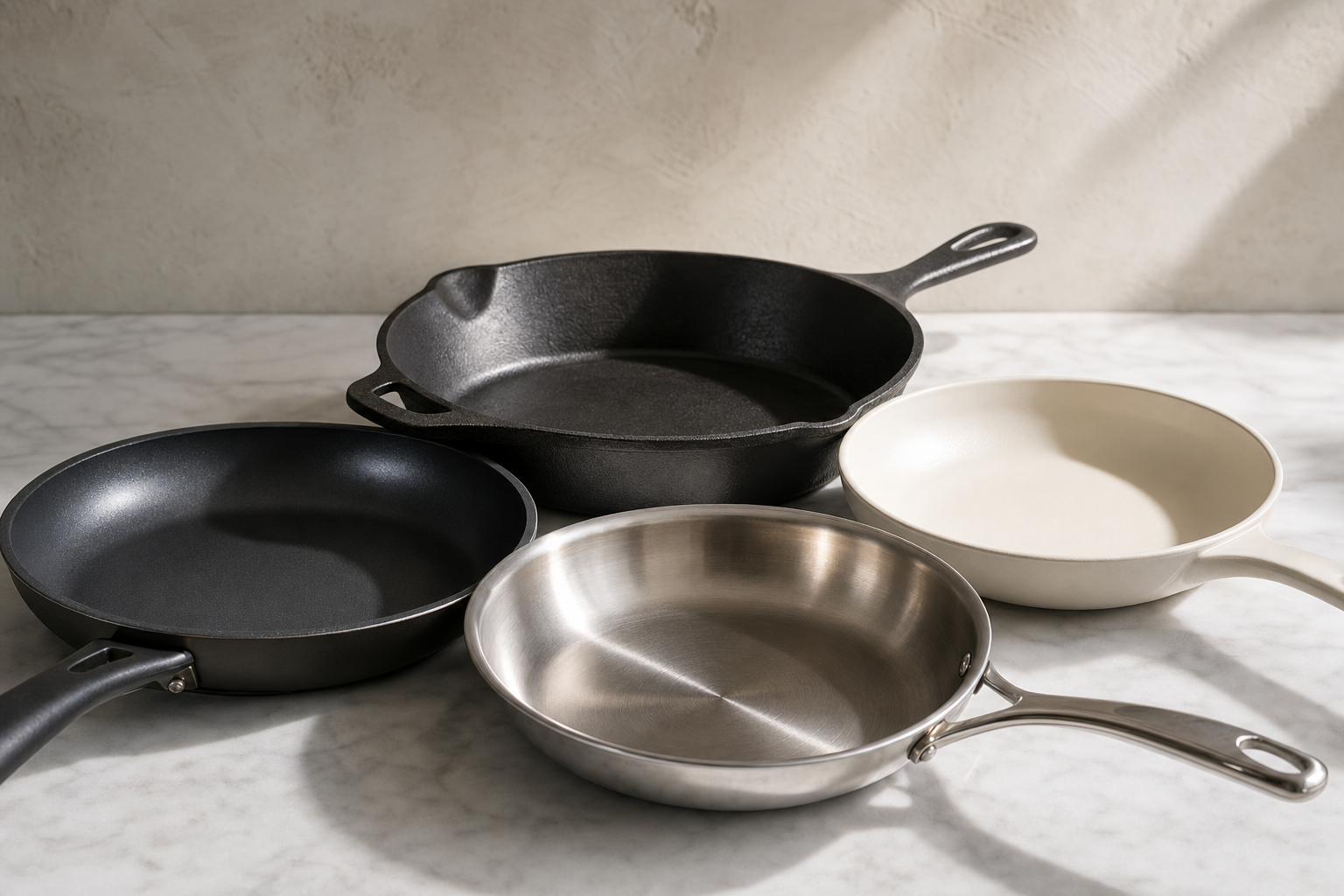
Let’s start with non-stick, because it is usually sold as the kitchen’s best friend. And yes, when it is brand new, it does make eggs slide around like they’ve hired a lawyer. The problem is what sits behind that convenience. Traditional non-stick coatings are linked to the long, deeply reassuring history of PFAS chemicals, including PFOA, the kind of industrial saga that made the DuPont story famous for all the wrong reasons. If you’ve heard whispers about lawsuits, contaminated water, and corporations behaving like cartoon villains with better PR, that is the general neighborhood. Even when newer pans are marketed as PFOA-free, the larger PFAS question has not exactly become adorable overnight. Add to that the fact that non-stick coatings scratch, degrade with heat, hate metal utensils, and often become disposable right around the time you finally learned how to use them properly. So yes, non-stick is convenient, in the same way fast fashion is convenient: cheap upfront, disappointing later, and somehow everyone acts surprised when it falls apart.
Stainless Steel: The Rational Adult in the Room
Stainless steel, or inox, is not flashy. It does not promise that your omelet will perform figure skating. What it offers instead is durability, versatility, and the kind of reliability that becomes weirdly attractive once you’ve thrown away your third peeling pan. A good stainless steel pan can last for decades, handles high heat beautifully, and is ideal for searing, sautéing, building sauces, and getting those browned bits that make food taste like you know what you’re doing. It is also non-reactive, so tomatoes, lemon, and wine will not trigger a small kitchen chemistry drama. The downside? Food can stick if the pan is not properly preheated or if you skimp too much on fat. Stainless steel asks for a little technique, which is annoying for approximately one week and liberating afterward. Once you learn heat control, it becomes one of the most useful pans in the house.
Cast Iron: Heavy, Moody, and Absolutely Worth It
Cast iron is the pan equivalent of a grumpy grandparent who survives every fall in the staircase and still makes the best potatoes. It lasts forever, holds heat incredibly well, and can go from stovetop to oven without complaint. For roasting vegetables, searing mushrooms, cooking cornbread, crisping tofu, or making a one-pan shakshuka, it is a beast. Properly seasoned cast iron also develops a naturally easier-release surface over time, which is satisfying in a slightly obsessive way. It may even add a little iron to food, which can be useful for some people. Of course, there are inconveniences: it is heavy, slower to heat, and needs some basic care to avoid rust. You cannot treat it like a disposable object and then act betrayed when it looks sad. But if you want one pan that could outlive trends, influencers, and probably civilization, can defend you pretty well against thieves, cast iron is a strong candidate.
Ceramic: Better Than Old-School Non-Stick, but Not Built for the Long Haul
Ceramic pans are often marketed as the clean, modern answer to traditional non-stick. And to be fair, they are generally a more reassuring option than classic PTFE/PFAS-coated pans if your main concern is avoiding those forever-chemical headlines. They are usually easy to use at first, need less oil than stainless steel, and feel less intimidating for delicate foods. But here comes the less glamorous bit: ceramic coatings tend to lose their slickness over time, sometimes faster than people expect, especially with high heat, dishwasher abuse, or general weekday chaos. In other words, ceramic is often less durable than stainless steel or cast iron. It may be a decent transitional pan, but it is rarely the heirloom romance some packaging suggests. It is more of a short-term relationship with nice branding.
Quick Pros and Cons, Without the Marketing because I don't sell anys pans
Non-stick: easy for eggs and pancakes, low-fat cooking, easy cleanup. Cons: coating wears out, scratches easily, poor high-heat performance, questionable chemical legacy, short lifespan. Stainless steel: ultra-durable, excellent for browning and sauces, non-reactive, oven-friendly, long-term value. Cons: learning curve, sticking if misused, usually pricier upfront. Cast iron: nearly immortal, great heat retention, naturally improves with seasoning, superb for searing and oven cooking. Cons: heavy, maintenance required, can react with acidic foods if seasoning is weak. Ceramic: pleasant to use, lower-stick at first, often marketed as a cleaner option. Cons: performance fades, not as durable, less impressive for serious browning, often ends up replaced sooner than advertised.
So What Should You Actually Buy?
If you want the most sustainable and practical setup, a mix usually wins: one stainless steel skillet for everyday sautéing and sauces, one cast iron pan for high-heat cooking and oven jobs, and maybe a ceramic pan if you really want an easier surface for delicate items and accept that it may not be your forever pan. The bigger point is this: durable cookware supports durable habits. It helps you cook real food more often, waste less, and stop feeding the industry of short-lived kitchen gadgets that break your heart and your budget. No pan will save dinner on its own, obviously. But some pans will still be there in ten years, while others will be in the trash somewhere in India.
Comments
Be the first to comment 👇